
What Every Agricultural Scientist Should Know About Key Soil Parameters
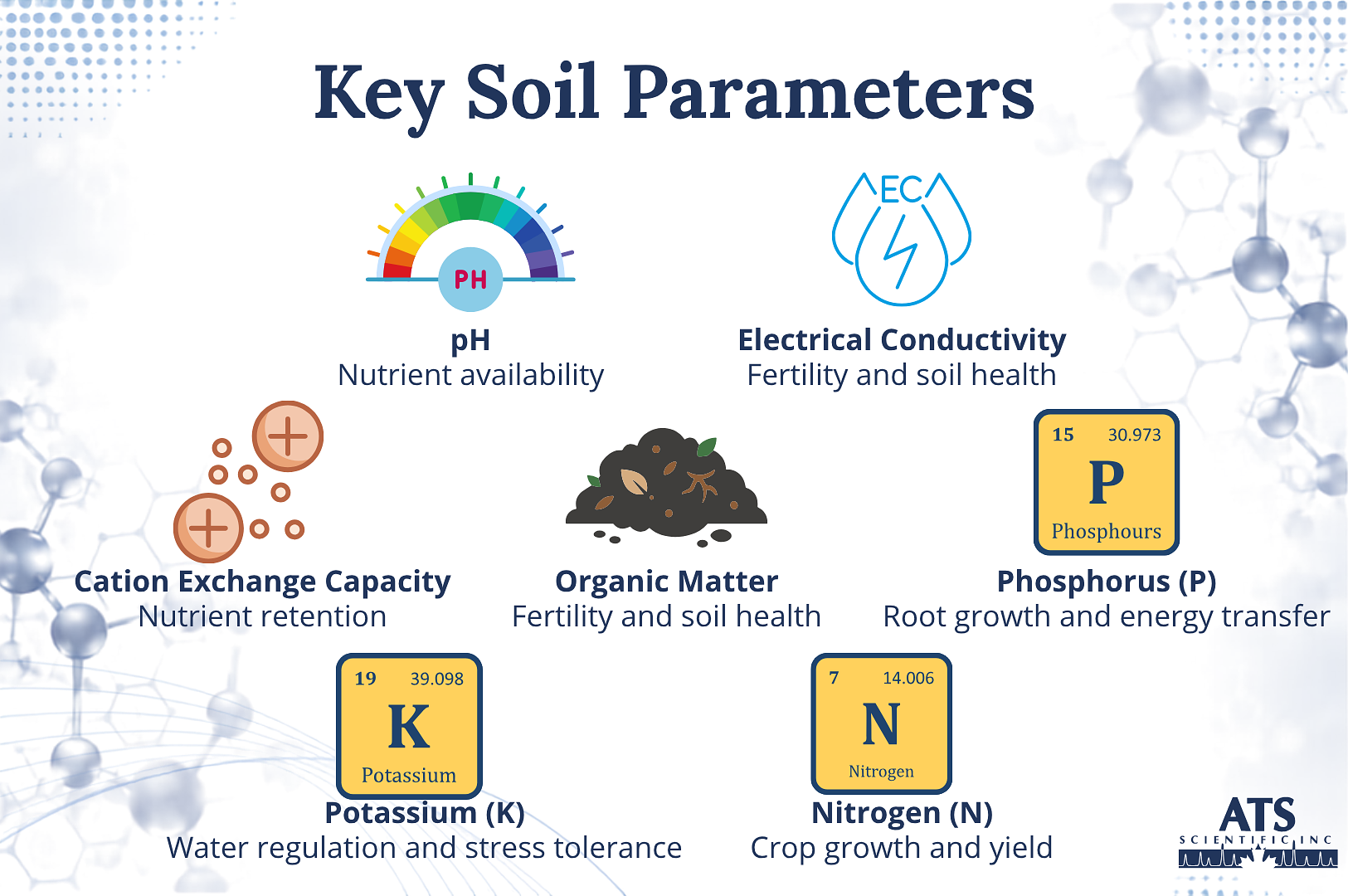
Soil properties directly influence nutrient availability, root development, water management, and crop productivity.
Agricultural scientists use soil testing to identify conditions that may limit crop growth.
Understanding key soil properties helps scientists interpret soil-test results and develop appropriate fertilizer, amendment, irrigation, and soil-management strategies.
This article examines the essential soil properties that every agricultural scientist should understand.
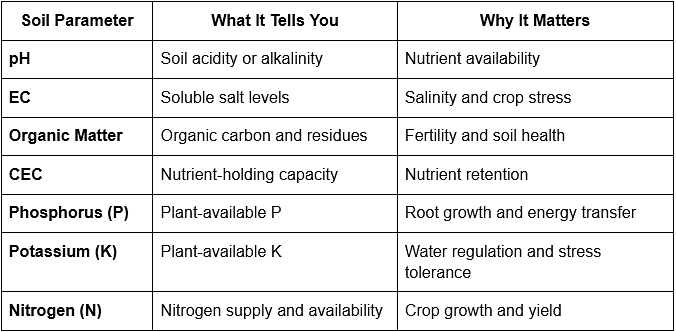
1. Soil pH — probably the most important starting point
pH influences nutrient availability, chemical reactions, microbial activity, and root growth. Nutrients need to be in forms that plants can access, and pH strongly affects the availability of P, Fe, Mn, Zn, Cu, B, Mo and Al.
pH tells you whether the soil environment is suitable for nutrient availability and root growth.
Highly acidic soils can increase Al/Mn toxicity and reduce the availability of some nutrients, while alkaline soils can increase the risk of Fe, Zn, Mn and Cu deficiencies.
2. EC — "Is the soil too salty?"
Electrical conductivity (EC) indicates the concentration of soluble salts in the soil solution.
High salinity makes it harder for plants to take up water, potentially causing physiological drought even when soil moisture is adequate.
EC can help answer:
- Is the soil saline?
- Could germination or crop establishment be affected?
- Is irrigation contributing to salts?
- Is drainage adequate?
Instrument for pH & EC Measurement
For laboratories measuring both soil pH and EC, the SEAL Minilab provides simultaneous measurement of both parameters.
SEAL Minilab
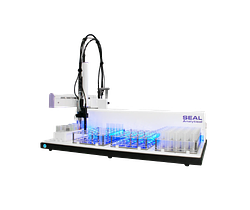
- Simultaneous pH & EC measurements
- Multiple calibration points for both parameters
- Scalable for bench space, throughput, and capacity
- Customizable automation options, including buffer addition
3. Organic Matter — "How healthy and functional is the soil?"
Organic matter influences nutrient cycling, water retention, aggregation, microbial activity, CEC, soil structure and erosion resistance.
OM is an indicator of the soil's long-term fertility and physical and biological condition.
However, higher OM does not automatically mean more plant-available nutrients.
4. CEC — "How much nutrient can this soil hold?"
Cation Exchange Capacity (CEC) describes the soil's ability to retain positively charged nutrients such as K⁺, Ca²⁺, Mg²⁺ and NH₄⁺.
Sandy soils generally have lower CEC, while clay-rich and organic-matter-rich soils tend to have higher CEC.
CEC helps you understand the soil's nutrient-holding capacity and how nutrient concentrations should be interpreted.
A low-CEC soil generally has less capacity to retain nutrients such as K⁺ against leaching, while a high-CEC soil can hold more.
5. Phosphorus
Phosphorus supports energy transfer, root development, DNA/RNA, flowering and early crop establishment.
But both deficiency and excess matter:
- Too little P → deficiency and reduced crop performance
- Too much P → increased environmental risk
Excess phosphorus can enter water bodies and contribute to eutrophication.
Soil P testing helps determine both whether crops need P and whether P applications may be excessive.
6. Potassium
Potassium supports stomatal regulation, water relations, enzyme activation, stress tolerance, carbohydrate transport and crop quality.
Testing exchangeable K helps determine whether the soil can supply enough K to the crop.
- Low K → potential yield or quality limitation
- Adequate K → additional fertilizer may not be needed
- Very high K → unnecessary expense and potential nutrient interactions
Instrument for Nutrient Analysis
After soil extraction and preparation, nutrient concentrations can be measured using a Segmented Flow Analyzer (SFA).
AA500
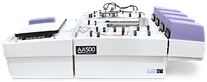
- Simultaneous multi-parameter analysis
- Inline digestion, filtration, and dilution
- High-throughput processing
- Automated overnight shutdown
- Flexible multi-test manifolds
The AA500 can also support multi-parameter nutrient analysis, allowing laboratories to measure multiple soil nutrients efficiently within the same analytical workflow.
7. Nitrogen
Nitrate-N
How much nitrate is currently available to the crop?
Nitrate is mobile and can be lost through leaching, denitrification and runoff, making nitrate testing useful for N fertilizer management.
Ammonium-N
Measures another plant-available form of N. NH₄⁺ can later be converted to nitrate through nitrification.
Total N
How much nitrogen is contained in the soil overall?
Importantly, total N ≠ immediately available N. Much of the N is held in organic compounds and must be mineralized before plants can use it.
Measuring Total Nitrogen with Kjeldahl Analysis
For laboratories measuring total nitrogen, Kjeldahl analysis provides a standardized workflow that converts nitrogen in the sample into a measurable form.
The process consists of digestion, followed by steam distillation and titration. Each step requires specific equipment to prepare and quantify the nitrogen in the sample.
Digestion — DKL Series
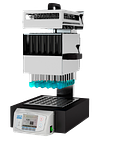
- Automated digestion
- Reduced manual lifting
- Excellent thermal homogeneity
- Multiple capacity options
Distillation & Titration — UDK Series
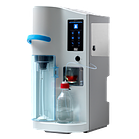
- 2-in-1 distillation & titration
- Steam distillation technology
- Integrated colorimetric titration
- Automated reagent dosing