
Total Kjeldahl Nitrogen (TKN) is a laboratory measurement used to determine the concentration of organic nitrogen and ammonia/ammonium nitrogen in a sample. In soil analysis, TKN provides information about an important portion of the soil's nitrogen pool and can help researchers understand nitrogen cycling and changes in soil nutrient status.
Nitrogen is an essential plant nutrient required for processes such as protein production, chlorophyll formation, and plant growth. However, nitrogen in soil exists in several different forms, and these forms do not all have the same role or availability to plants.
This is why understanding what TKN measures — and what it does not measure — is important when interpreting soil fertility results.
What Does TKN Measure?
The Kjeldahl measurement can be represented by:
TKN = Organic Nitrogen + Ammonia/Ammonium Nitrogen
For example:
- SAMPLE #01
- TKN: 0.18% N
This means the sample contains 0.18% nitrogen as measured by the Kjeldahl method, representing its organic nitrogen and ammonia/ammonium nitrogen.
TKN can therefore provide insight into the size of these nitrogen pools and help monitor changes associated with fertilization, crop management, compost, manure, and other organic amendments.
Is Organic Nitrogen Useful to Plants?
Yes. Organic nitrogen is an important part of soil fertility, but it is generally not immediately available to plants in the same way as nitrate and ammonium.
Organic nitrogen can serve as a longer-term nitrogen reservoir in soil. Through microbial activity, some organic nitrogen can be converted into ammonium and subsequently nitrate through the process of mineralization and nitrification.
A simplified nitrogen pathway is:
Organic N → NH₄⁺ → NO₃⁻
This means organic nitrogen can contribute to future plant-available nitrogen even though it is not necessarily available for immediate plant uptake.
Does TKN Tell You How Much Nitrogen Is Immediately Available?
Not by itself.
Plants can generally take up inorganic nitrogen in forms such as ammonium-N (NH₄⁺) and nitrate-N (NO₃⁻).
A simplified representation of plant-available inorganic nitrogen is:
Plant-Available N ≈ NH₄⁺-N + NO₃⁻-N
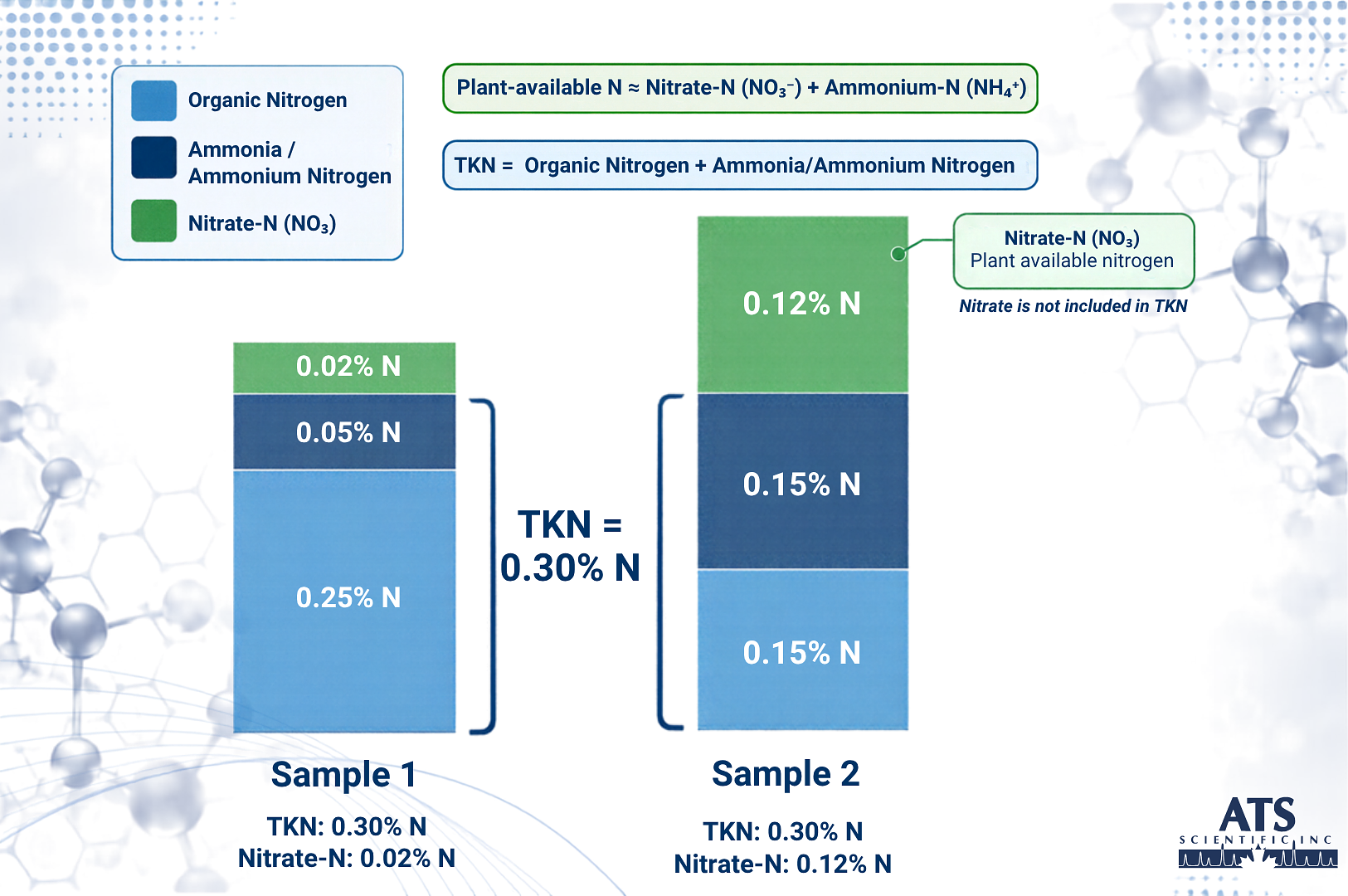
However, nitrate-N is not included in TKN.
This creates an important distinction:
- TKN = Organic N + NH₄⁺-N
- TKN ≠ Total Nitrogen
- TKN does not include NO₃⁻-N
Therefore, two soil samples can have the same TKN but different amounts of nitrate-N. Their TKN results alone cannot describe the complete nitrogen profile or determine how much nitrogen is immediately available to plants.
What Does TKN Tell You About Soil Fertility?
TKN can provide valuable information about the soil's organic and ammonia/ammonium nitrogen pools. It can help track nitrogen cycling and changes in soil nitrogen associated with management practices and organic inputs.
However, soil fertility is broader than TKN alone. To better understand nitrogen availability and overall nutrient status, TKN can be interpreted alongside measurements such as nitrate-N, phosphorus, potassium, pH, and organic matter.
How Is TKN Measured?
The Kjeldahl method consists of three main stages:
Digestion → Distillation → Titration
During digestion, organic nitrogen is converted into ammonium. During distillation, ammonia is separated from the digested sample. Titration is then used to determine the nitrogen concentration.
Automate TKN Analysis with the VELP UDK Series
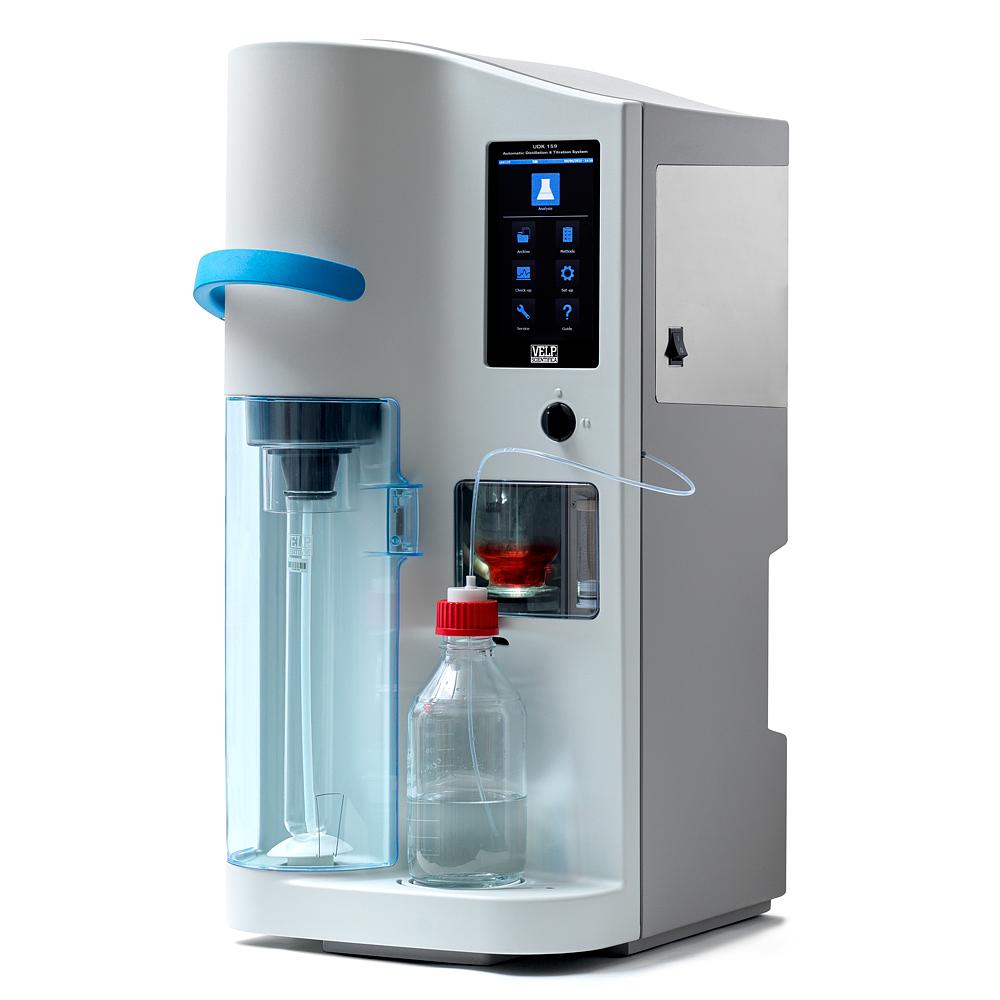
Once digestion is complete, the VELP UDK Series combines distillation and titration in one automated system.
The UDK automates these two analytical stages, reducing repetitive manual handling and helping laboratories process routine Kjeldahl analyses efficiently.
Digestion → Automated Distillation + Titration → TKN Result
For laboratories analyzing multiple soil samples, the UDK Series provides an automated approach to the distillation and titration stages of TKN analysis.
TKN Is One Part of the Soil Fertility Picture
A TKN result tells you about the organic and ammonia/ammonium nitrogen present in a soil sample. It can provide valuable information about the soil's nitrogen pool and nitrogen cycling, but it does not measure every form of nitrogen or directly determine all plant-available nitrogen.
By combining TKN with other soil measurements, laboratories can build a more complete picture of soil nutrient status, nitrogen availability, and soil fertility.