
Segmented Flow Analysis (SFA) has been a cornerstone of automated, high-throughput nutrient analysis for decades, and for good reason. Designed to deliver stable, reproducible measurements, SFA allows laboratories to handle complex chemistries with confidence across long analytical runs.
Many laboratories today still rely on systems that were designed years ago. Instruments such as the SEAL Analytical AutoAnalyzer II and AA3 established the foundation for automated nutrient analysis and continue to deliver reliable results when properly maintained. The underlying chemistry has remained consistent, though the way laboratories operate has undeniably changed. Higher sample volumes, more demanding matrices, reduced staffing, and tighter turnaround expectations have shifted the focus from simply running analyses to managing entire workflows efficiently.
This shift raises an important question:
If the chemistry hasn’t changed, what actually has?
Where Time Is Really Spent
In many environmental laboratories, the challenge is not the nutrient analysis method itself, but everything around it.
Operators spend their time on:
- System startup and stabilization
- Manual cleaning and shutdown
- Monitoring long runs
- Adjusting for drift or inconsistencies
- Handling samples that fall outside expected ranges
These steps are often accepted as part of the process; however, they are not part of the chemistry, but a part of how the system is designed. Over time, these small inefficiencies add up, affecting both productivity and consistency.
From Method Automation to Workflow Automation
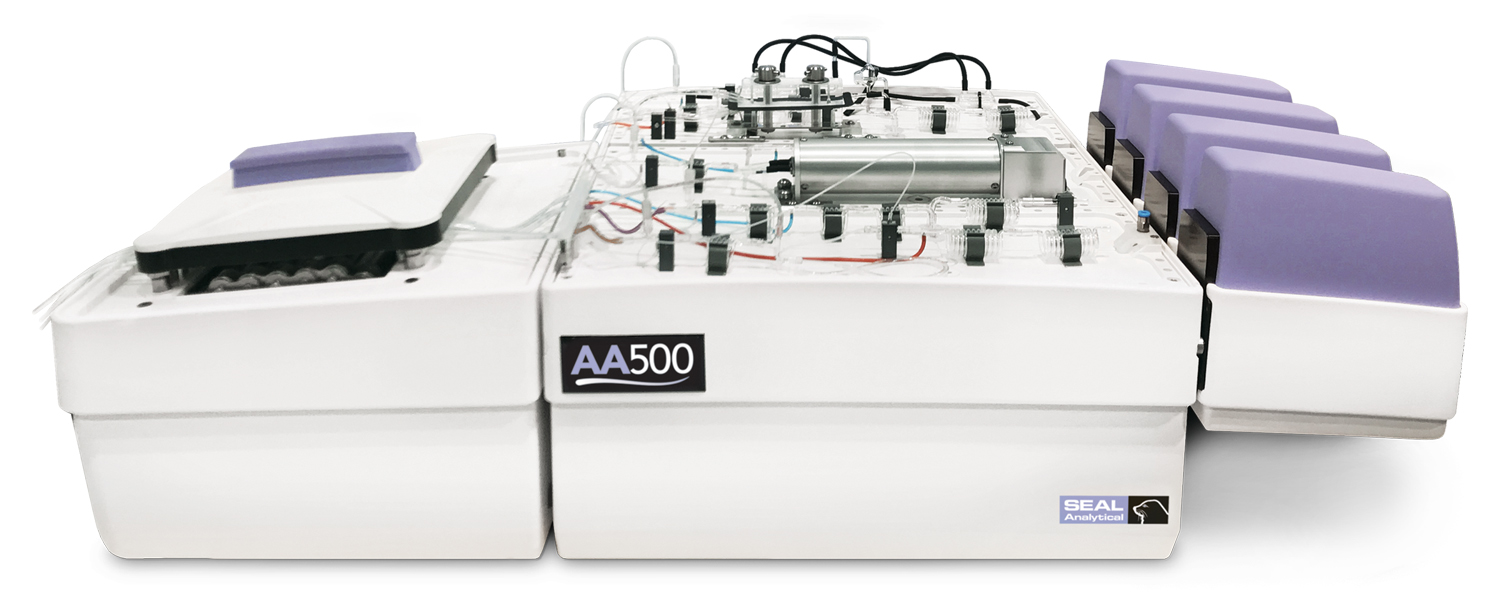
Earlier SFA systems automated the chemistry. Modern systems extend that automation across the entire workflow. Instead of requiring manual intervention at multiple stages, newer platforms are designed to manage startup, cleaning, sample handling, dilution, and extended runs with minimal input. The chemistry hasn’t changed, but the way laboratories interact with it has.
Segmented Flow Analysis is known for steady-state measurement and reproducibility, but consistency isn’t defined at the detector alone. It depends on how reliably samples are introduced, how stable flow conditions remain over time, and how well the system performs during long, unattended runs. Modern SFA systems, such as the SEAL Analytical AA500 are designed to control these variables more effectively, helping maintain stability throughout the entire analytical process, not just at the point of measurement.
Why This Matters Now
As laboratory demands continue to evolve, the pressure is no longer just to produce accurate results; it is to do so efficiently, repeatedly, with minimal intervention, and across high-throughput sample needs. For laboratories using legacy systems, this often means balancing reliable chemistry with increasing operational effort.
Looking Ahead
Understanding how segmented flow analyzers have evolved, from systems like the AA3 to newer platforms such as the AA500, helps put that balance into perspective. While the core principles of segmented flow analysis remain unchanged, modern instruments have been designed to address many of the operational limitations that laboratories have learned to work around over time.
Newer platforms such as the SEAL Analytical AA500 build on the proven foundation established by earlier systems like the AA3, while introducing a higher level of workflow automation, digital control, and system integration. The result is not a change in chemistry, but a refinement in how that chemistry is delivered. With greater consistency and reduced manual intervention, the AA500 has improved adaptability to modern laboratory demands which includes full automation from system startup to overnight analysis and unattended shutdown.
👉 Contact us to learn more about modern segmented flow systems and how instruments like the SEAL Analytical AA500 can improve high-throughput laboratory workflows.