
Automated wet chemistry and nutrient analysis have been refined over the years, yet the architecture behind many of the systems used daily is rarely discussed. When laboratories evaluate flow analysis platforms, attention often centers on speed, throughput, or detection limits. These are all undoubtedly important parameters, and indispensable to productivity in a lab, as well as reliability of the results, yet the true differentiator lies deeper: in how the chemistry is handled before it even reaches the detector. That design choice shapes everything that follows.
Two of the most widely used approaches in automated nutrient analysis, Flow Injection Analysis (FIA) and Segmented Flow Analysis (SFA), are often grouped together under the broad label of “continuous flow analysis.” Both automate chemistry, both improve efficiency over manual methods, and both have clear merits. Their internal design philosophies, however, are fundamentally different. Understanding how each method manages reaction timing, mixing, and measurement helps explain why segmented flow analysis is increasingly viewed as a forward-looking solution for laboratories seeking greater stability and reproducibility.
A Question of Timing: Peak vs. Steady State
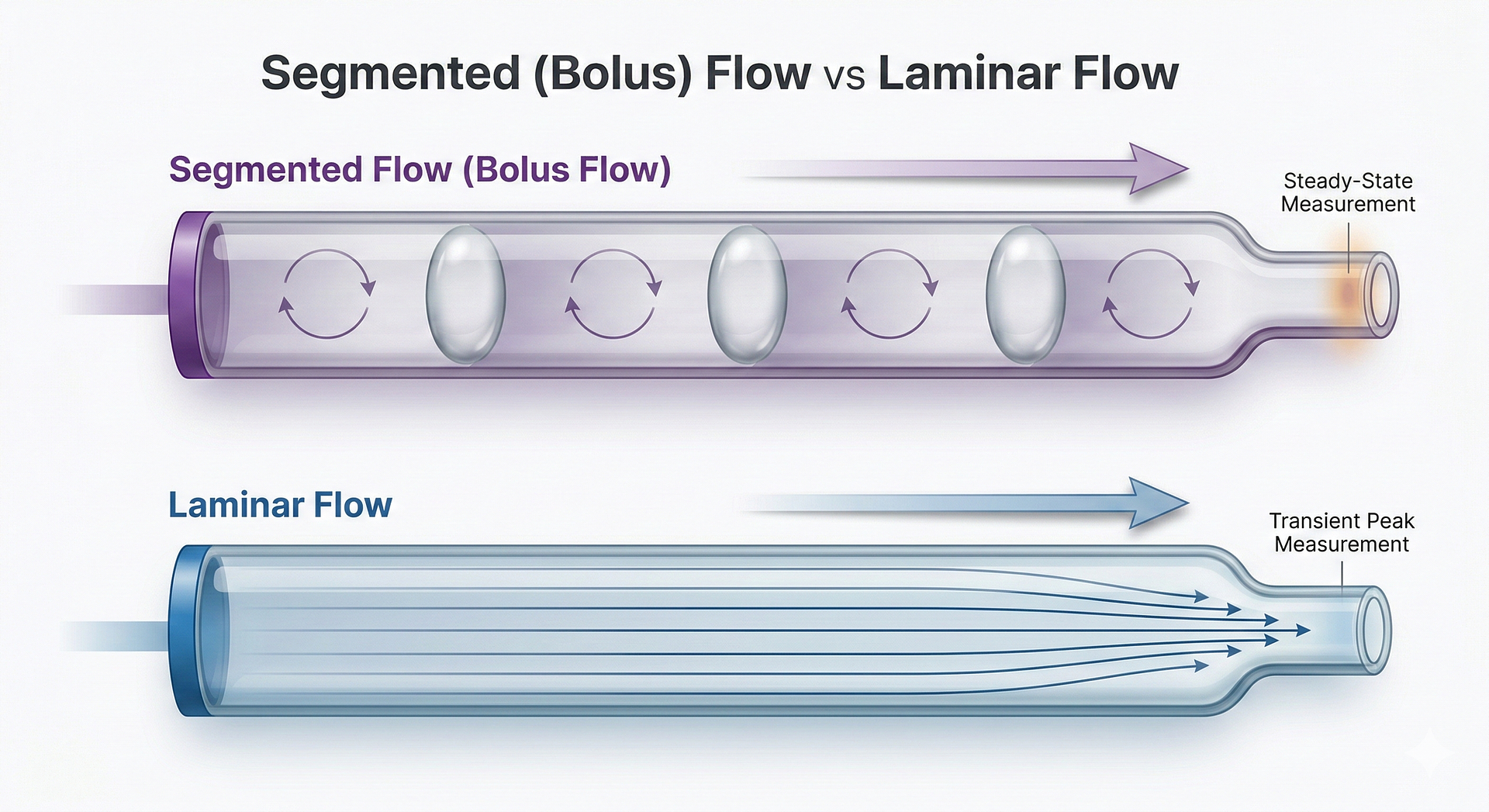
In flow injection systems, a sample is injected into a carrier stream and reacts with reagents as it moves toward the detector. The measurement typically captures a transient peak, a moment in time when the reaction reaches a detectable maximum.
Segmented flow systems take a different approach. In SFA, the sample and reagents are pumped continuously and separated by small air or nitrogen bubble segments. These bubbles create reaction zones that travel through mixing coils, allowing the chemistry to fully develop before reaching the detector. Instead of reading a fleeting peak, the system measures the reaction at steady state.
Steady-state detection can offer:
- Greater signal stability
- Improved reproducibility across long runs
- Lower detection limits due to sustained maximum signal
- Reduced sensitivity to small flow disturbances
Rather than capturing a snapshot, segmented flow measures a completed reaction.
Why Air Segmentation Is an Advantage
Air bubbles are sometimes viewed as a nuisance in analytical systems. In segmented flow analysis, however, they are intentional and essential.
The air segments:
- Physically separate samples, helping reduce carryover
- Maintain consistent reaction boundaries
- Make fluid movement visible, simplifying diagnostics
- Support more consistent mixing behavior
Due to each reaction segment being isolated and controlled, the system maintains clearer distinction between samples, an advantage in high-throughput analytical environments.
Built for Complex Chemistry
Modern laboratories often require methods that involve longer reaction times, heating steps, or online digestion processes. Segmented flow systems naturally accommodate these demands because the continuous, controlled stream allows reactions to reach completion before detection.
This flexibility reduces dependence on precise peak timing and makes performance less sensitive to small environmental variations. For laboratories prioritizing consistency throughout extended analytical runs, that structural difference is significant.
Looking Forward: Stability as a Design Priority
As laboratories demand lower detection limits, longer unattended runs, and greater matrix tolerance, the advantages of steady-state measurement and controlled segmentation become increasingly relevant. Method design shapes data quality.
Segmented flow analysis represents an approach where reaction completion, signal stability, and reproducibility are built into the system architecture. Moreover, as segmented flow analysis continues to evolve, instrument design has evolved with it. Earlier generation systems such as the SEAL Analytical legacy system AA3 established segmented flow as a reliable and sensitive approach for automated wet chemistry for more than 30 years.
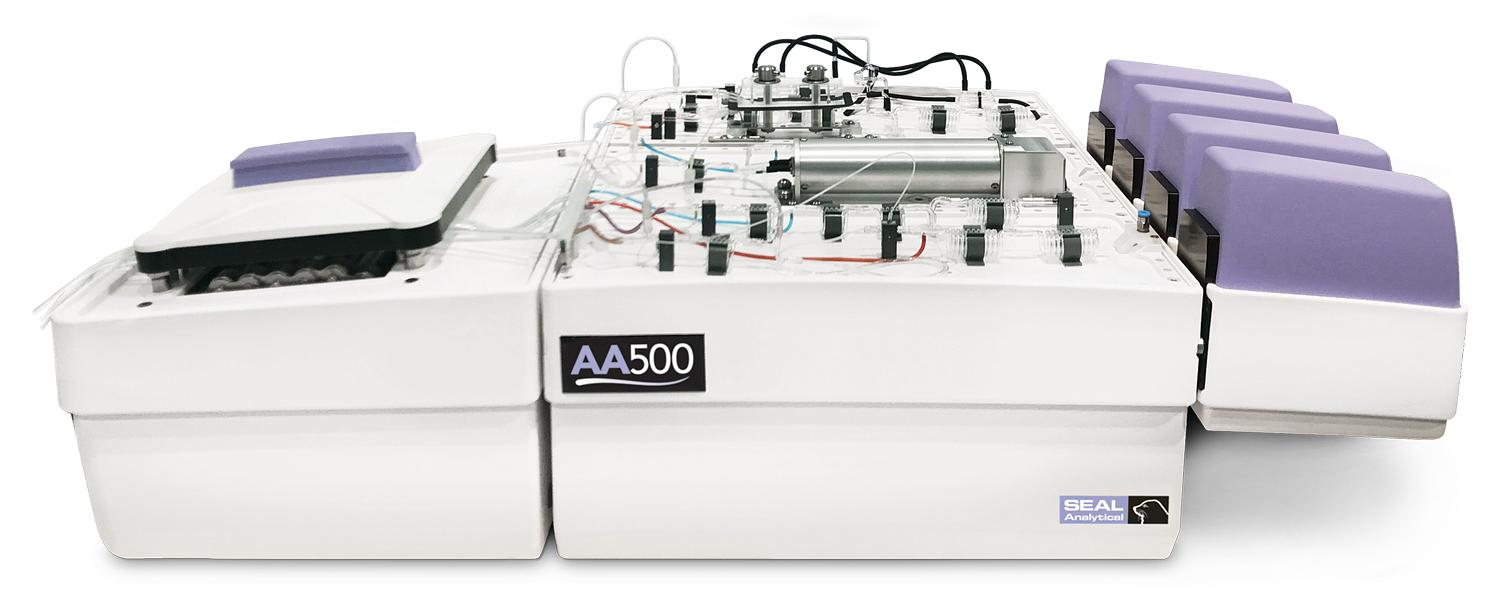
Newer platforms like the AA500 Segmented Flow Analyzer build on that same segmented flow foundation while incorporating modern automation, digital control, enhanced photometry, and more flexible multi-channel capabilities. The core chemistry remains the same: steady-state measurement through segmentation, with the additional bonuses of improved workflow automation, streamlined maintenance, and greater adaptability to current laboratory demands.
Curious to see how segmented flow works in greater technical detail?
Explore SEAL Analytical’s full article on the advantages of segmented flow analysis to learn how segmentation improves sensitivity, stability, and overall analytical performance.