
The ROI of Preventative Maintenance: What's the Real Cost of Laboratory Downtime?
For commercial laboratories, instrument downtime is more than an inconvenience. When a critical analytical instrument stops working, testing schedules can fall behind, sample backlogs grow, and customer commitments may be affected. Depending on the instrument and laboratory workload, even a few days of downtime can translate into thousands of dollars in lost productivity and additional operating expenses.
Preventative maintenance (PM) is often viewed as a routine operating expense. However, when compared with the potential costs of unexpected equipment failure, regular maintenance can offer a measurable financial return.
So, how much does laboratory downtime actually cost, and how can preventative maintenance help protect your investment?
The Hidden Cost of Laboratory Instrument Downtime
When an instrument becomes unavailable, the impact often extends beyond the repair cost. Laboratory analysts may have to pause scheduled work, leaving samples waiting and reducing the number of tests the laboratory can complete each day. For commercial laboratories that charge per sample or testing service, this lost capacity can translate directly into lost revenue.
As the backlog grows, the laboratory may need to send urgent samples to external providers to maintain customer commitments, adding outsourcing fees and transportation expenses. Meanwhile, an unexpected breakdown may require urgent service visits, replacement parts, additional labour, and expedited shipping, increasing repair expenses compared with routine scheduled maintenance.
Getting the instrument running again does not necessarily resolve the entire disruption. Analysts may need to work extended shifts to clear delayed samples, while failed runs or inconsistent results can require repeat sample preparation and analysis. This adds labour, reagent, and consumable expenses, even after the original equipment issue has been addressed.
The financial impact of downtime therefore extends from the initial breakdown through the recovery period, affecting both daily operating expenses and the laboratory's ability to generate revenue.
How Much Can Instrument Downtime Cost?
Let's consider an example involving a commercial laboratory that relies on a critical analytical instrument for routine customer testing.
Assume the instrument experiences an unexpected breakdown and remains unavailable for two working days.
The laboratory estimates the following financial impact:
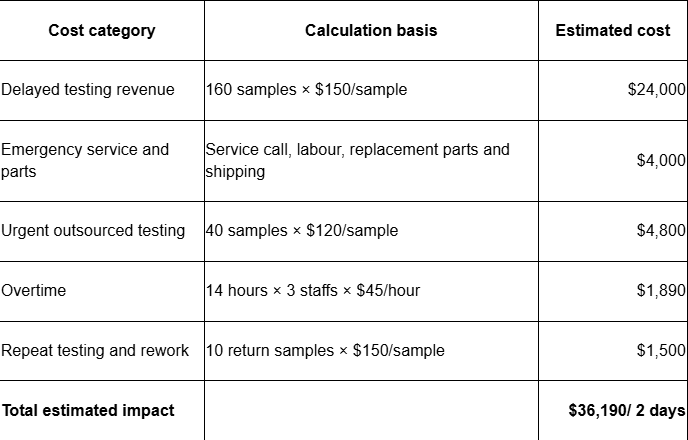
This example illustrates how the financial impact can grow. For a laboratory operating multiple instruments or processing high sample volumes, the potential exposure may be even greater.
Note: These figures are illustrative assumptions for a commercial laboratory, not industry averages. Actual costs depend on instrument utilization, service arrangements, laboratory capacity, and the ability to recover delayed work.
Preventative Maintenance vs. Reactive Maintenance
Reactive maintenance involves addressing equipment problems after they occur. While this approach may appear less expensive in the short term because maintenance is performed only when needed, unexpected failures can create substantial repair and operational costs.
Preventative maintenance involves scheduled inspections, servicing, performance checks, and replacement of components based on manufacturer recommendations and equipment usage.
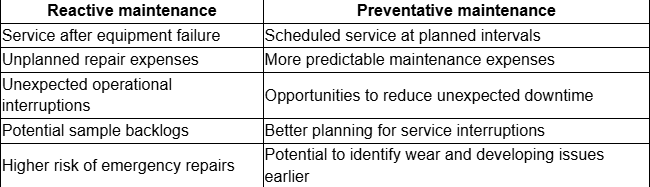
The objective is to identify potential issues before they develop into more serious problems.
How to Calculate the ROI of Preventative Maintenance
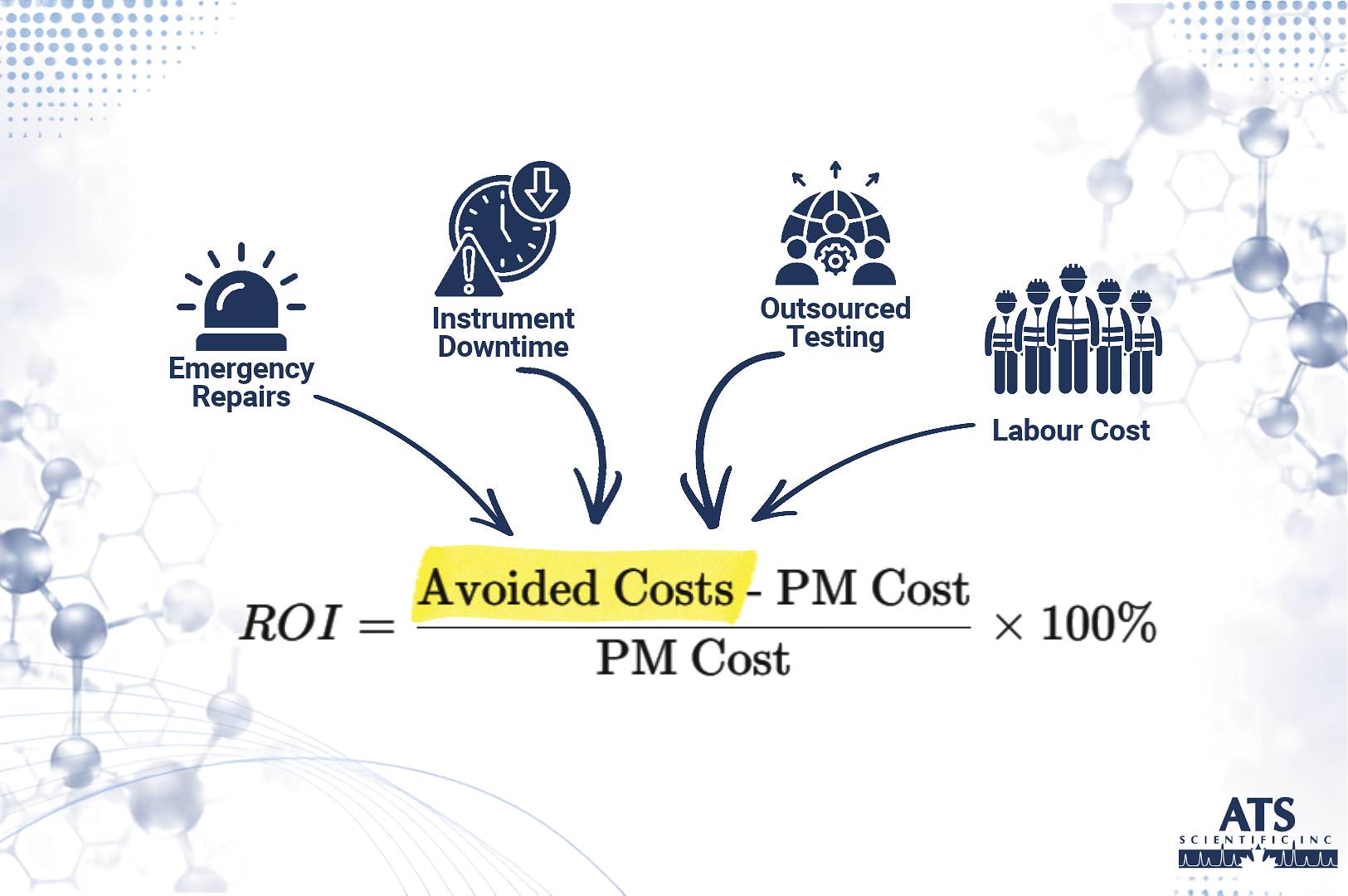
Preventative Maintenance ROI
ROI = (Avoided Costs − PM Investment) ÷ PM Investment × 100%
Let's use the previous commercial laboratory example to estimate the potential return.
Assume:
- Annual preventative maintenance investment: $4,000
- Estimated additional costs from one unexpected breakdown: $36,190/ 2 days
- Annual breakdown probability without PM: 60%
- Annual breakdown probability with PM: 20%
Based on these assumptions, a $4,000 annual preventative maintenance investment could generate $14,476 in expected avoided breakdown expenses, resulting in an estimated net financial benefit of $10,476 and an ROI of approximately 262%.
This example demonstrates how reducing the risk of an unexpected breakdown can make scheduled maintenance financially worthwhile.
*It is important to remember that the calculation measures expected financial benefits, rather than guaranteed savings. Actual results will depend on the instrument, its operating environment, maintenance history, and service requirements.
Make Preventative Maintenance Part of Your Laboratory's Operating Strategy
When evaluating the cost of laboratory equipment, the purchase price is only one part of the investment. Ongoing service, maintenance, consumables, and unexpected downtime all contribute to the total cost of ownership.
Preventative maintenance is an investment in the long-term performance and productivity of laboratory equipment. As the example demonstrates, a $4,000 annual maintenance investment could help avoid an estimated $14,476 in breakdown-related expenses, generating an ROI of 262%.
Rather than viewing preventative maintenance as an additional expense, laboratories should consider its potential to protect productivity, reduce unexpected repair costs, and support long-term instrument performance.
Contact ATS Scientific to discuss preventative maintenance options for your laboratory equipment.