
Beyond Particle Size: Why Particle Shape Matters in Pharmaceutical
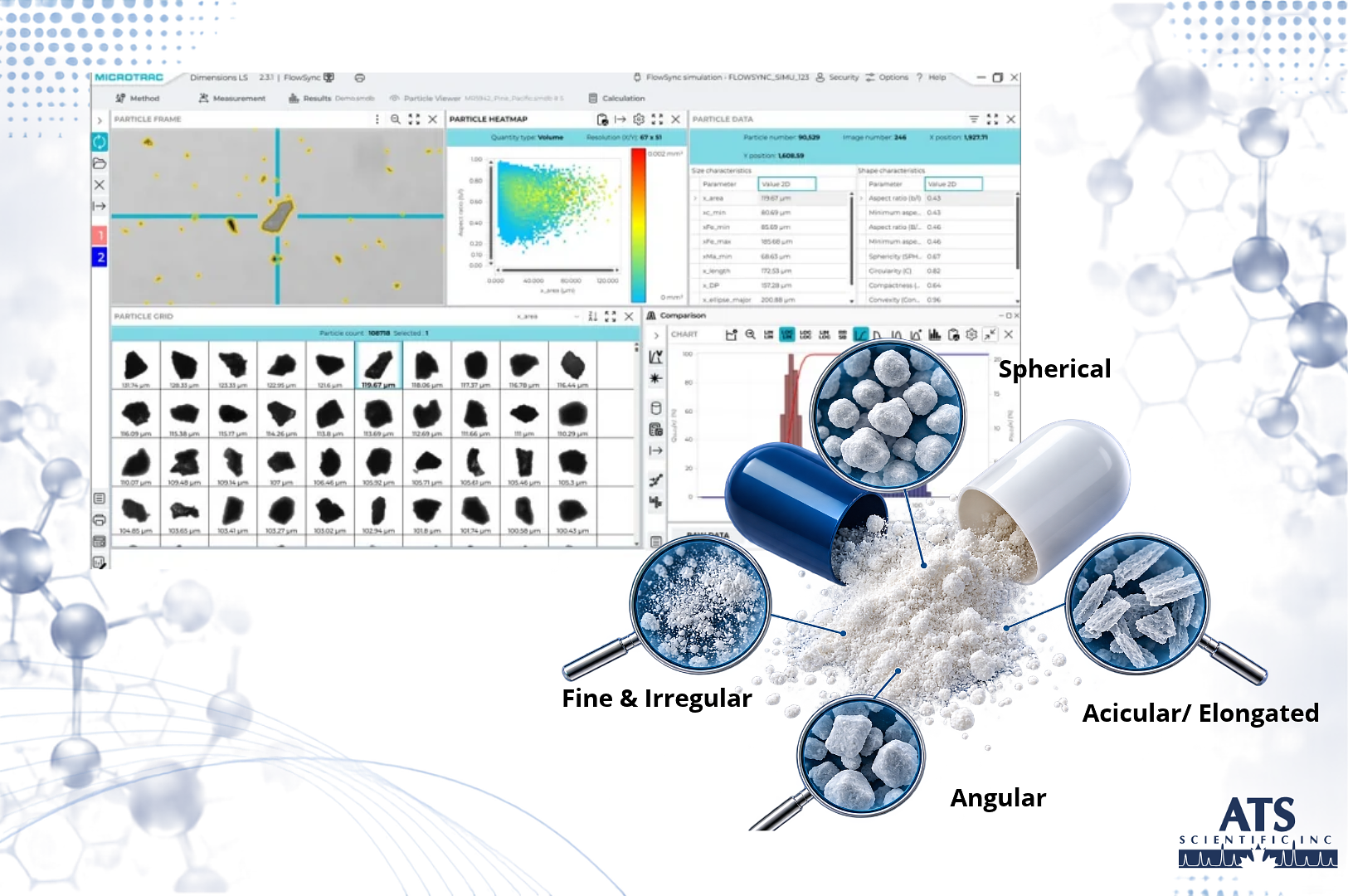
In pharmaceutical manufacturing, particle size is an important factor in product quality. From active pharmaceutical ingredients (APIs) to excipients and granules, understanding particle size distribution helps manufacturers monitor raw materials and maintain consistent production processes.
However, particle size only tells part of the story.
Two powder samples can have nearly identical particle size distributions while having very different particle shapes. These differences can influence how materials behave during blending, granulation and tablet production.
So, how can pharmaceutical laboratories gain a more complete understanding of their powders?
When Similar Particle Sizes Tell Different Stories
Consider two samples of pharmaceutical-grade starch. Both samples have nearly identical median particle sizes, measuring approximately 41 μm.
However, the particle analyzer reveals a significant difference:
- Sample 1: Contains compact, rounded particles.
- Sample 2: Contains a proportion of elongated, fibrous particles.
Although particle size measurements suggest the samples are similar, their particle morphologies tell a different story.
This distinction is important when evaluating pharmaceutical excipients. Particle shape provides additional information that can help researchers investigate differences in material properties and formulation behaviour.
Where Particle Characterization Matters in Pharmaceutical Manufacturing
Particle size and shape analysis can support several stages of pharmaceutical production.
1. Active Pharmaceutical Ingredients (APIs)
Many APIs are processed into fine powders, sometimes with a tendency to form agglomerates.
Characterizing their particle size and morphology helps researchers:
- Evaluate particle size distribution.
- Identify oversized particles and agglomerates.
- Compare material characteristics between batches.
- Monitor changes following milling and grinding.
2. Pharmaceutical Excipients
Excipients such as starch, cellulose and sugars are widely used in tablets and capsules.
Understanding their particle characteristics helps manufacturers evaluate raw material consistency and investigate differences that may affect formulation and processing.
3. Granules and Tablet Formulations
Particle size distribution and shape both contribute to the physical characteristics of pharmaceutical granules.
During tablet production, these properties can influence powder packing and compactability, which are important considerations when developing tablets with suitable mechanical strength and low friability.
4. Pharmaceutical Pellets and Coating
Pellet manufacturing involves granulation, extrusion, spheronization and coating processes.
Particle characterization can help manufacturers:
- Identify unwanted agglomerates.
- Monitor changes in pellet size during coating.
- Evaluate coating uniformity.
- Investigate particle characteristics that may influence drug release.
A More Complete Approach to Pharmaceutical Powder Analysis
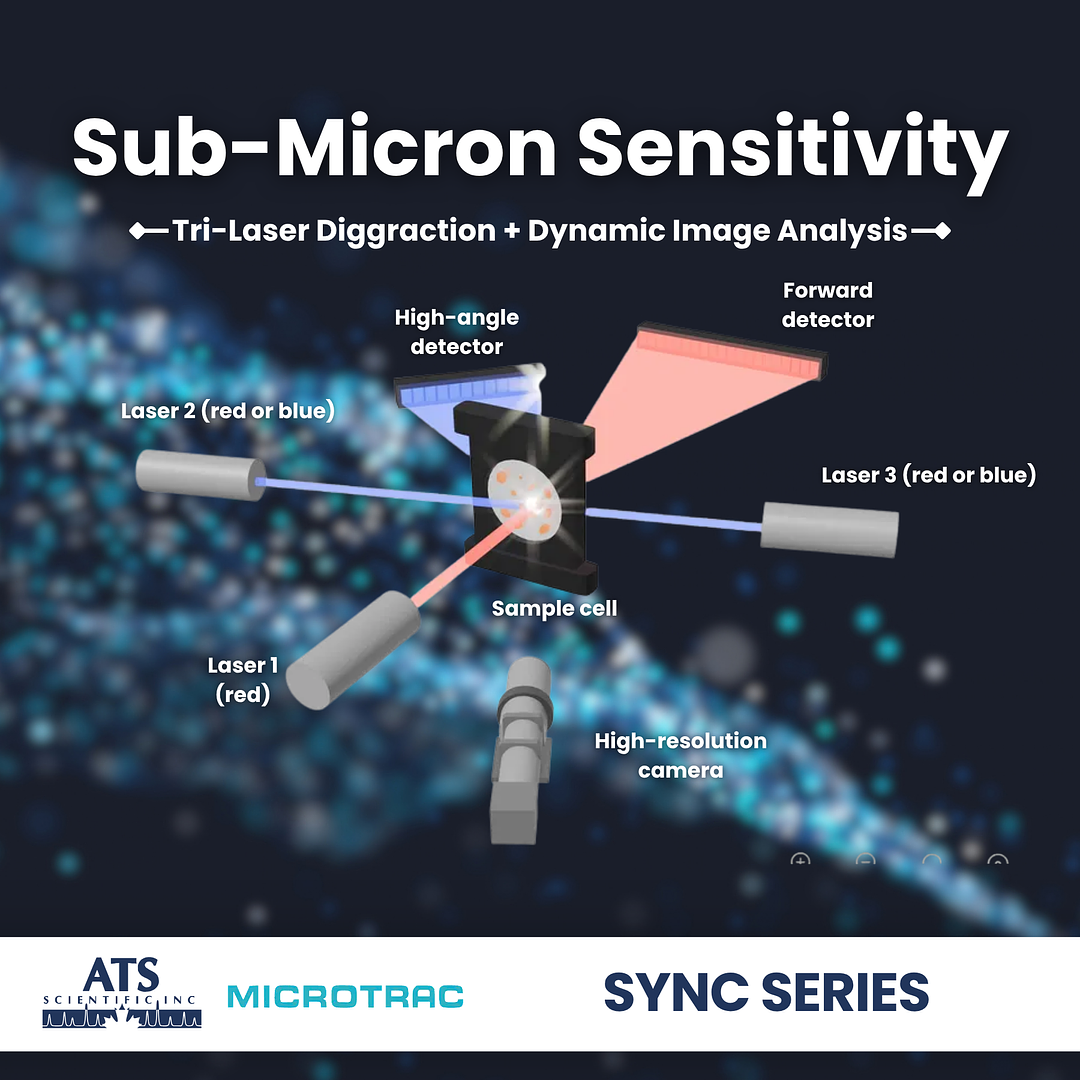
The Microtrac SYNC combines two complementary measurement technologies:
- Laser Diffraction: Determines particle size distribution across a wide range of particle sizes.
- Dynamic Image Analysis: Provides individual particle images and morphological information, including particle shape and dimensions.
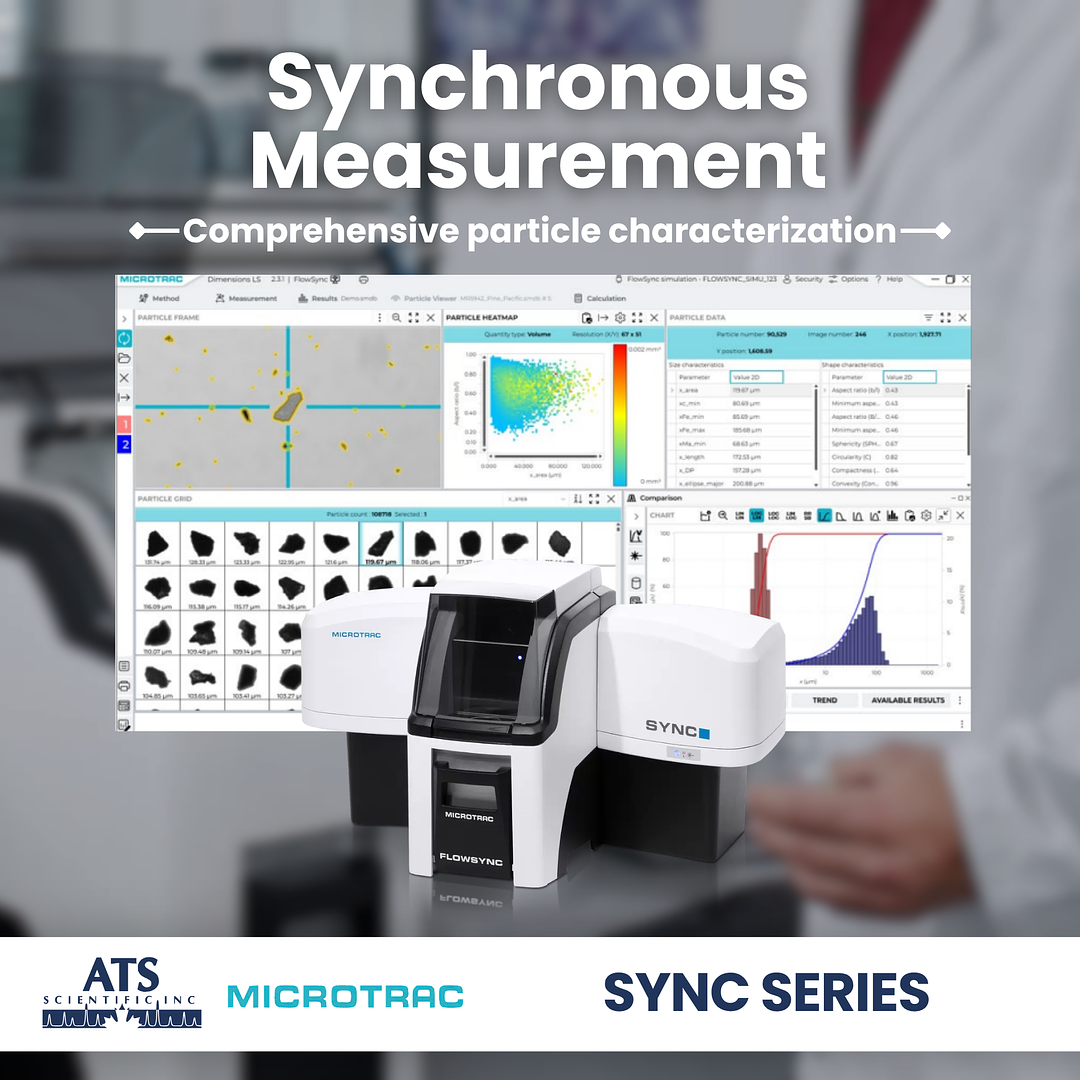
By combining these techniques in one instrument, SYNC allows researchers to examine particle size distribution alongside particle morphology.
This approach supports pharmaceutical research, raw material characterization and quality control, helping laboratories develop a more complete understanding of their powders and granules.
Understand More Than Particle Size
Pharmaceutical powder characterization involves more than measuring particle diameter. Particle shape, agglomeration and size distribution all provide valuable information about the materials used in drug development and manufacturing.
With the Microtrac SYNC, laboratories can combine laser diffraction and dynamic image analysis to gain a broader understanding of their particle characteristics.
Looking to improve your pharmaceutical powder characterization? Contact ATS Scientific to explore particle analysis solutions for your application.