
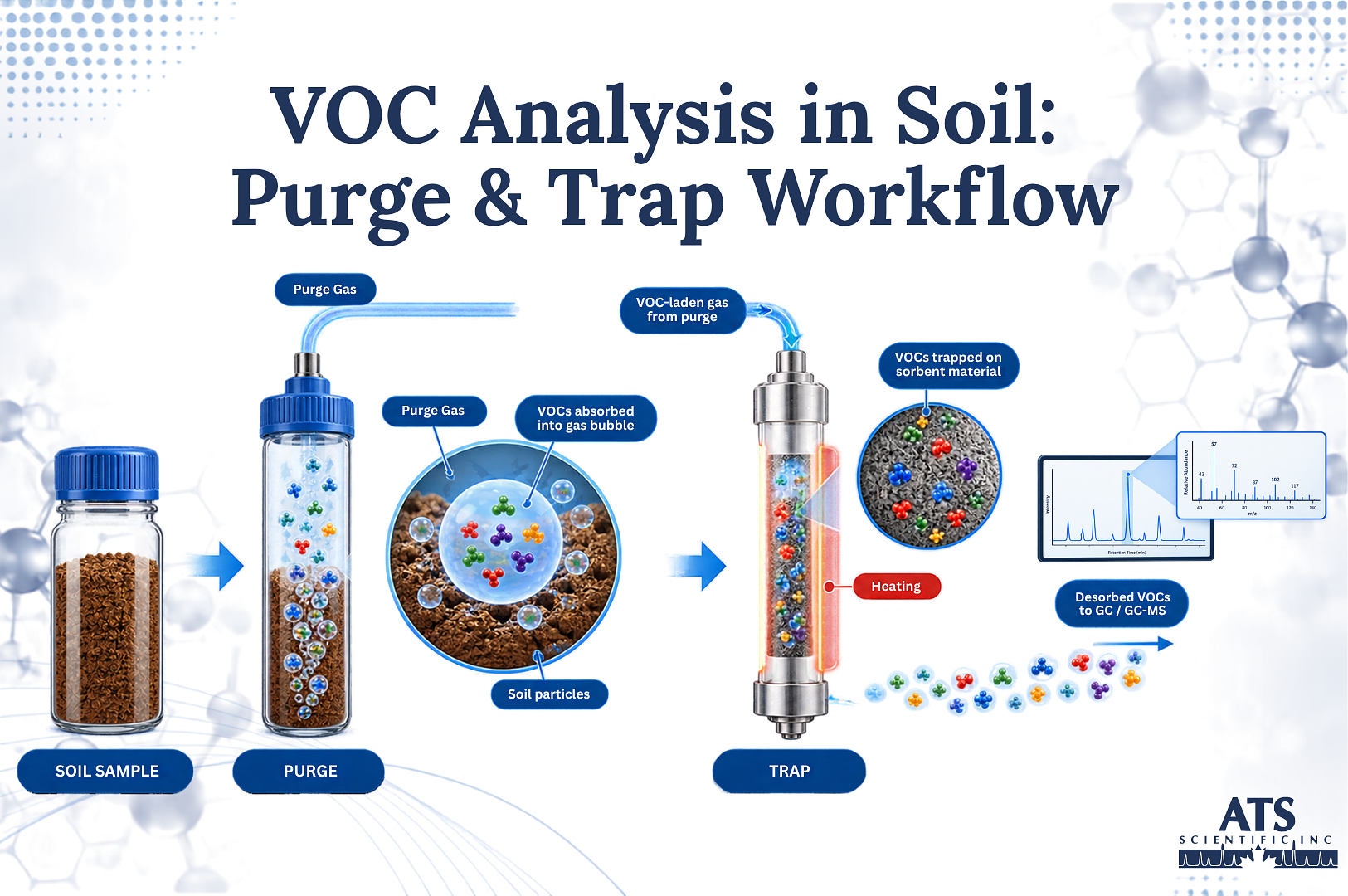
Volatile organic compounds (VOCs) can be found in soil as a result of industrial activity, petroleum products, solvents, pesticides, and other sources. Because VOCs can easily move from a liquid or solid matrix into the air, analyzing them requires careful sample handling and an effective extraction technique.
Purge and trap is one approach used for VOC analysis. The concept is straightforward: purge the VOCs from the sample, trap them, and then analyze them. But what actually happens during each step?
Step 1: Preparing the Soil Sample
A soil sample is placed into a sealed sample vessel. Because VOCs can escape easily, minimizing exposure to the surrounding environment is important during sample preparation and handling.
Step 2: Purging the VOCs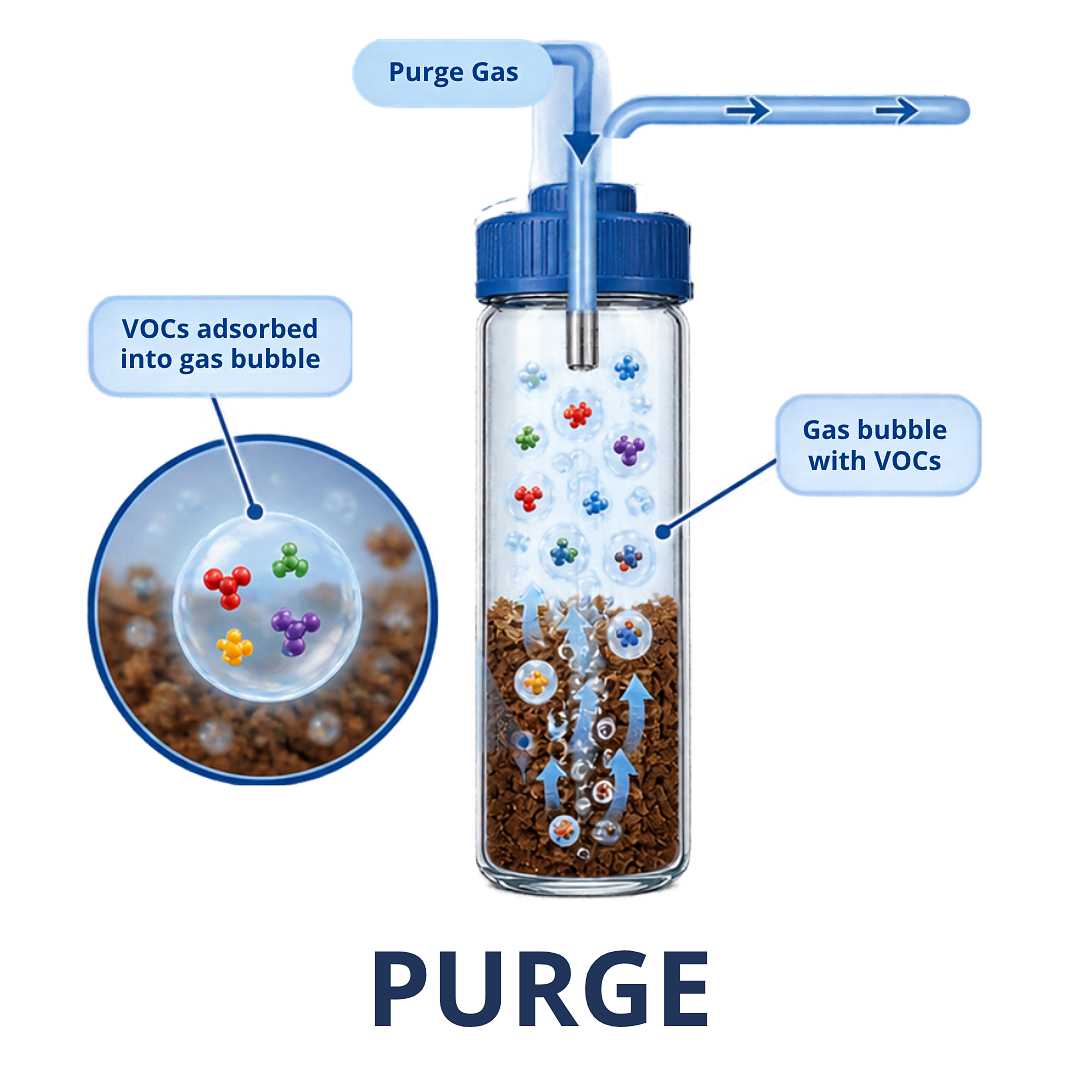
A purge gas is introduced through the soil sample. As the gas moves through the sample, volatile compounds transfer from the soil into the gas stream.
The efficiency of this step depends on factors such as the sample matrix, purge conditions, temperature, and gas flow. The goal is to transfer the VOCs from the soil into the gas phase for collection.
Step 3: Trapping the VOCs
The gas carrying the VOCs is directed to a trap containing a sorbent material. The VOCs are retained on the trap while the purge gas continues through the system.
This step effectively concentrates the VOCs before analysis, helping transfer them from the original soil sample into a smaller, more concentrated collection point.
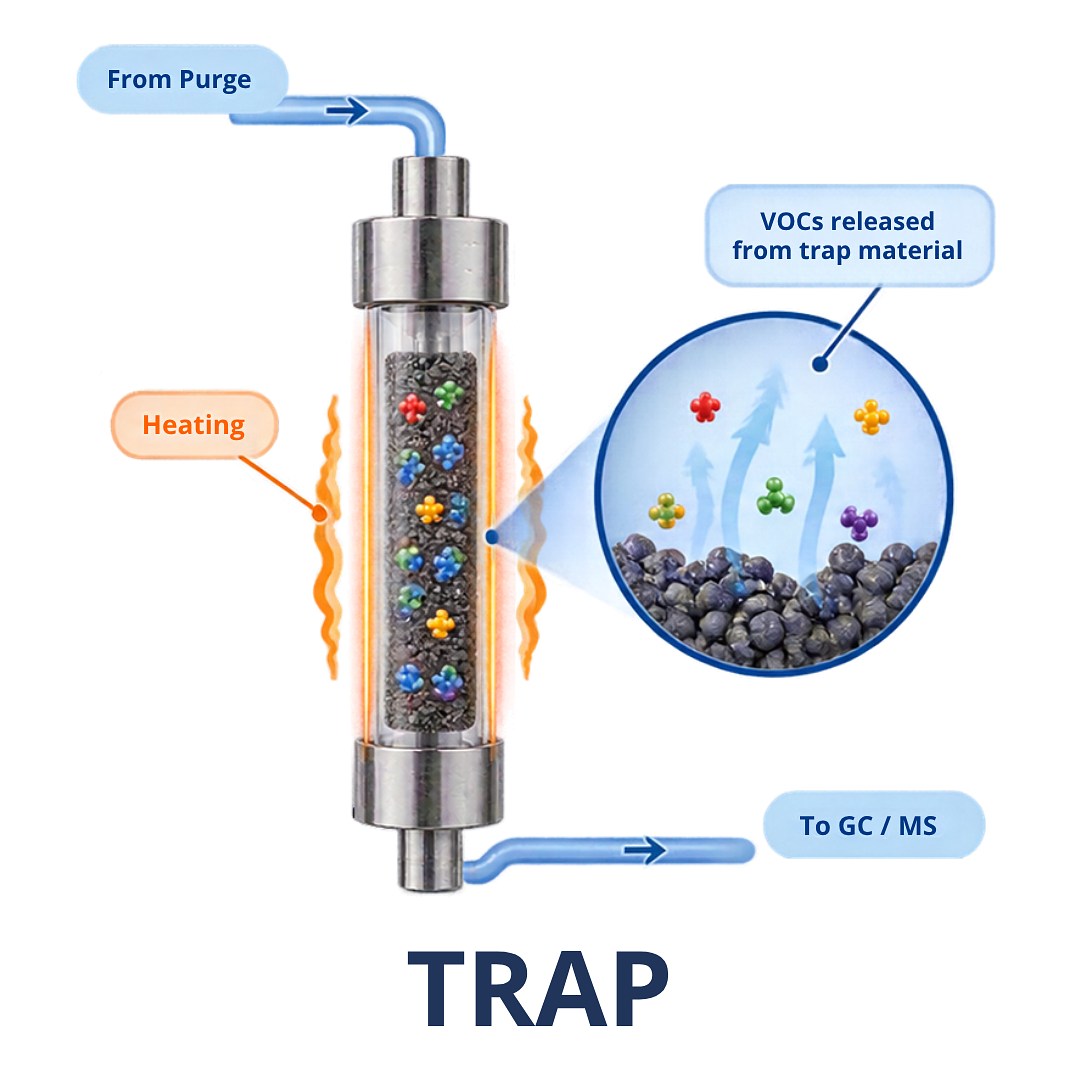
Step 4: Desorbing the Trap
Once purging is complete, the trap is heated. The captured VOCs are released from the sorbent and transferred into the analytical system.
Step 5: Analyzing the VOCs
The desorbed compounds are typically transferred to a gas chromatograph for separation and detection. Depending on the analytical method, additional detection techniques such as mass spectrometry can be used to identify and quantify individual VOCs.
Understanding the Complete Workflow
From soil sampling to final detection, each stage of purge and trap contributes to the overall VOC analysis workflow. Systems such as the Teledyne Tekmar Atomx XYZ integrate automated purge-and-trap processes to help streamline VOC sample preparation and analysis.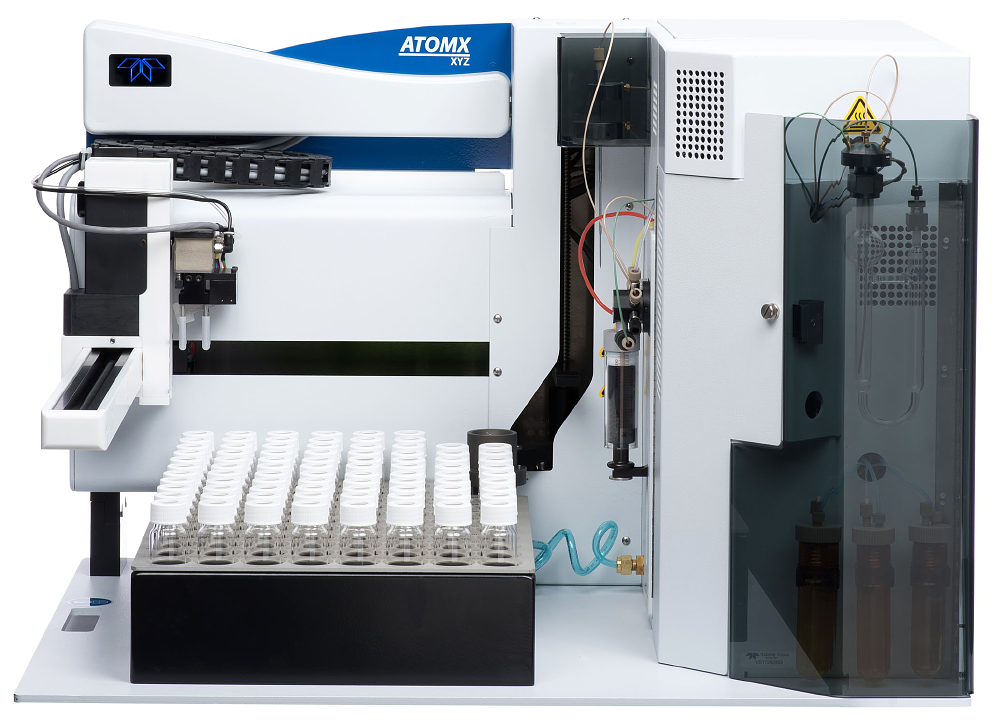
Understanding what happens during each step makes it easier to see how purge and trap transforms VOCs in a soil sample into compounds ready for instrumental analysis.