
Quick Summary
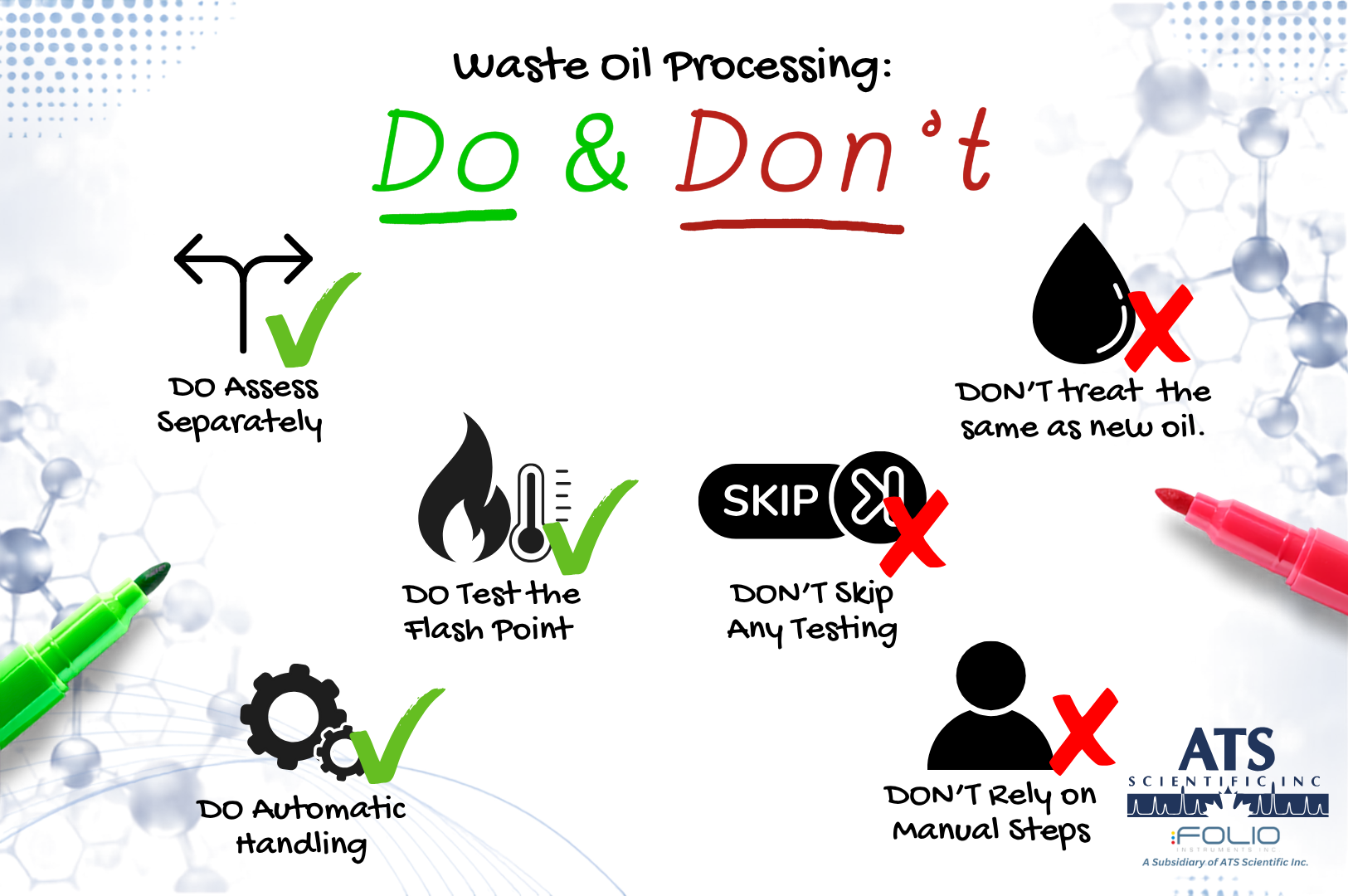
DO
- Test the Flash Point before processing
- Assess Waste Oil Separately by batch or source
- Use Automatic Handling to improve consistency
DON’T
- Rely on Manual Steps for routine testing
- Skip Flash Point Testing when assessing waste oil
- Treat Waste Oil Like New Oil without assessing its current condition
Waste oil can contain a range of contaminants depending on its source, previous use, and collection process. Fuels, solvents, water, and other materials can change its properties and affect how it should be handled.
That is why testing should be an important part of waste oil processing, especially when it comes to understanding its flammability. This guide covers the key Do’s and Don’ts for safely processing waste oil
Don’t: Skip Relevant Testing
Waste oil may look like typical used oil while containing unexpected volatile components.
Visual inspection alone cannot determine flash points. Testing provides a measurable result that can be used alongside other relevant assessments to understand the material before further processing.
Do: Test the Flash Point
Flash point testing helps determine the temperature at which a liquid produces enough vapour to form an ignitable mixture with air.
For waste oil, the result can provide an important indication of whether volatile contaminants may be present. Two batches of waste oil can look similar but have very different flash point characteristics.
Regular flash point testing can help you:
- Identify unexpected contamination
- Assess incoming waste oil
- Support safe handling and storage
- Monitor differences between batches
- Make better-informed processing decisions
When flash point is a relevant property, testing should be built into the workflow rather than treated as an optional check.
Don’t: Treat Waste Oil Like New Oil
New oil generally has a controlled formulation and known composition. Waste oil has already been exposed to operating conditions and may contain degradation products, water, fuel, solvents, or other contaminants.
Its current characteristics should be assessed rather than assumed from its original use.
Do: Assess Waste Oil Separately
Waste oil from different sources can have very different compositions. Used lubricating oil, hydraulic oil, and mixed industrial waste streams should not automatically be treated as the same material.
Assessing batches separately allows unusual results to be identified earlier and helps prevent one contaminated stream from affecting an entire collection.
Don’t: Rely on Manual Steps
Manual flash point testing can require operators to work closely with samples while they are being heated. This increases direct handling of material that may contain flammable or volatile components.
Where routine testing is required, reducing unnecessary manual steps can help minimize operator exposure and create a safer testing workflow.
Do: Use Automated Handling
When processing waste oil, minimizing unnecessary manual handling is important because the material may contain flammable or volatile components.
Automated flash point testing can perform key testing steps with less direct operator involvement, helping reduce the need to handle heated, potentially flammable samples. It can also provide consistent testing conditions from one sample to the next.
For laboratories testing waste oil regularly, automation provides a more controlled approach to routine flash point analysis.
To Safely Process Waste Oil, Choose PAC OptiFlash
A safer waste oil workflow starts with understanding what you are handling. Test the flash point, assess waste oil separately, and use automatic handling to reduce unnecessary manual steps.
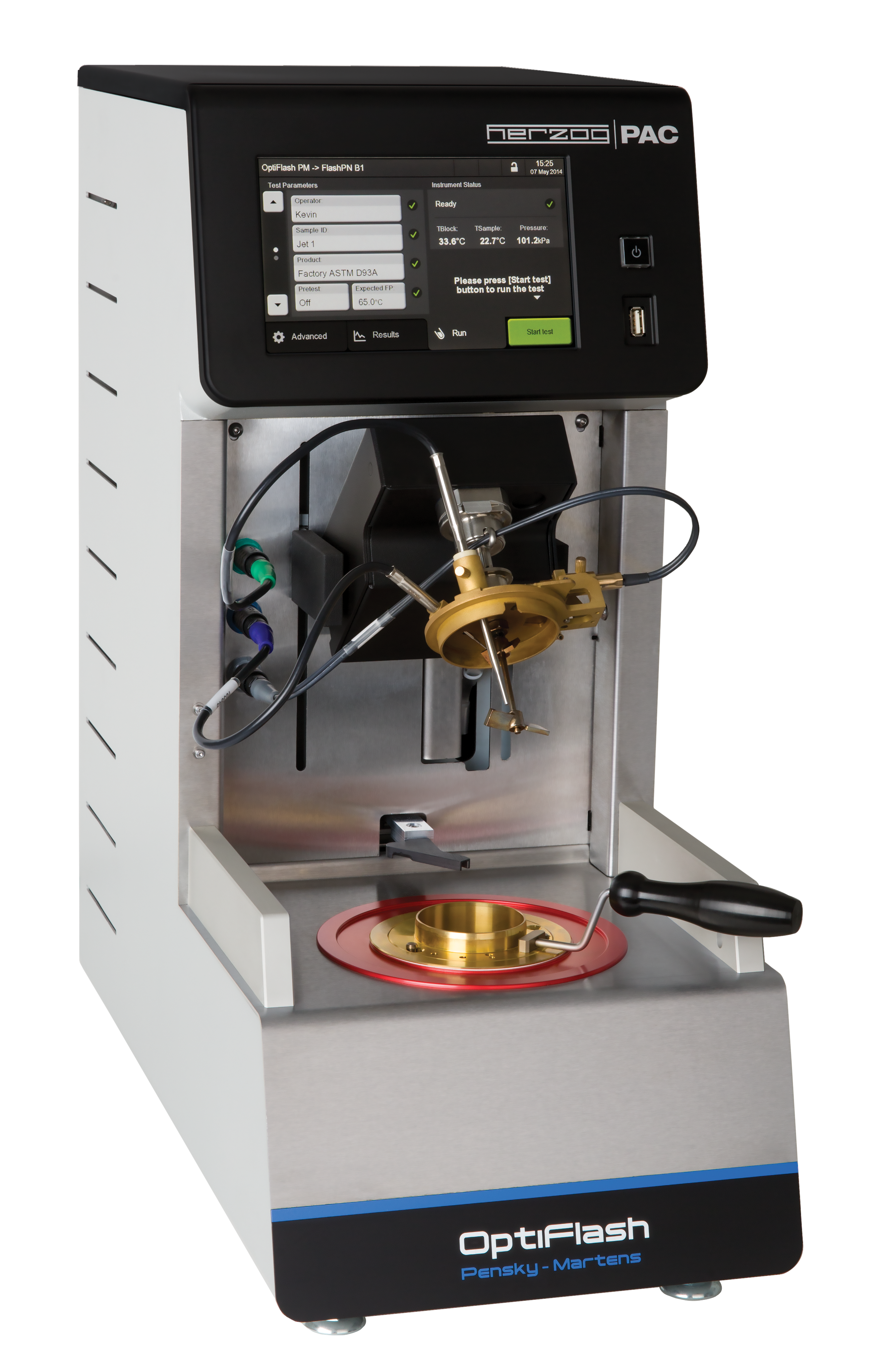
PAC OptiFlash provides an automated approach to routine
flash point analysis, helping laboratories assess incoming waste oil, identify differences between batches, and reduce direct handling of heated, potentially flammable samples. With consistent testing conditions from one sample to the next, OptiFlash makes flash point testing a practical part of the waste oil processing workflow.
Talk to Folio Instruments about PAC OptiFlash and your flash point testing requirements.