
Introduction
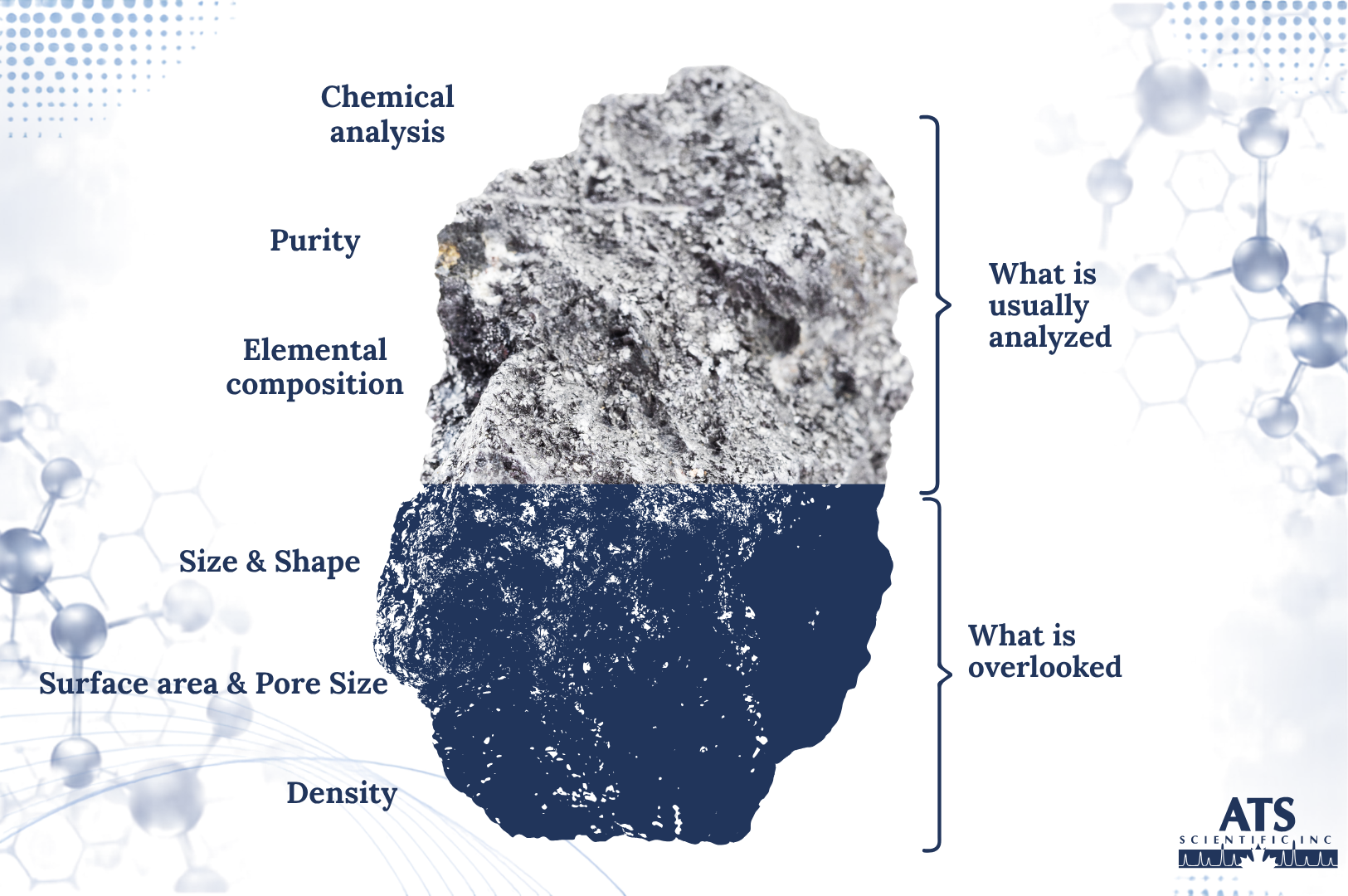
When characterizing a material, chemical analysis is often the first step. Elemental composition tells us what a material is made of. However, chemical composition alone does not always explain why materials with similar chemistry can behave differently.
This is where physical properties become important. They can provide additional insight into how a material is structured and how it may perform during applications.
These three key physical properties provide different perspectives on a material:
- Particle Size & Shape: Explains particle dimensions, geometry, flow, packing, mixing, and dispersion. — Recommended Product: SYNC
- Surface Area & Pore Size: Provides insight into accessible surface area and pore structure, which can influence adsorption and transport. — Recommended Product: BELSORP MAX X
- Density: Characterizes the solid material and provides insight into material structure and packing. — Recommended Product: BELPYCNO
1. Particle Size & Shape
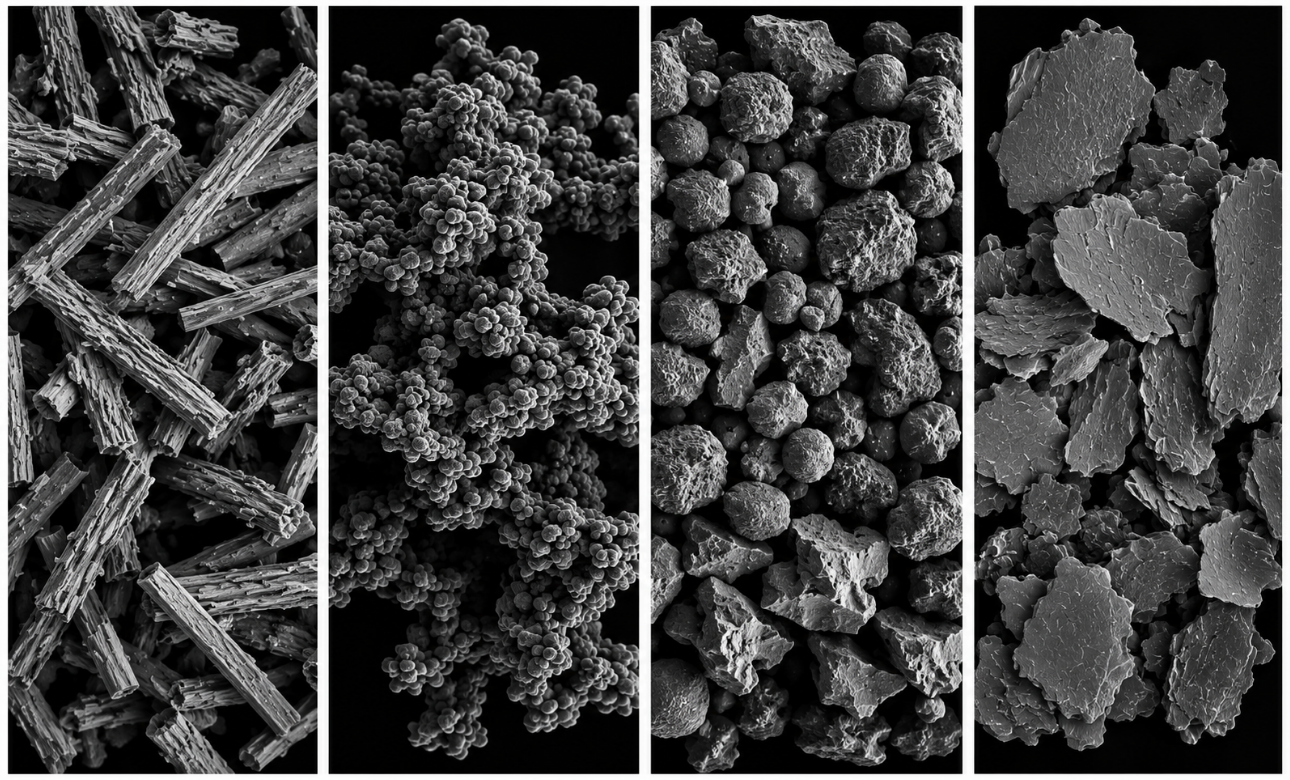
Particle size is one of the most commonly measured physical properties because it can directly affect how a material performs during processing. However, size alone does not tell the whole story.
Particles of similar size can behave differently when their shapes differ. Spherical, elongated, and irregular particles can pack, flow, and interact differently with one another.
These differences can affect:
- Flowability: Influences how easily a powder moves through equipment.
- Packing: Affects how efficiently particles fill available space.
- Dispersion: Influences how evenly a material distributes within another material.
SYNC
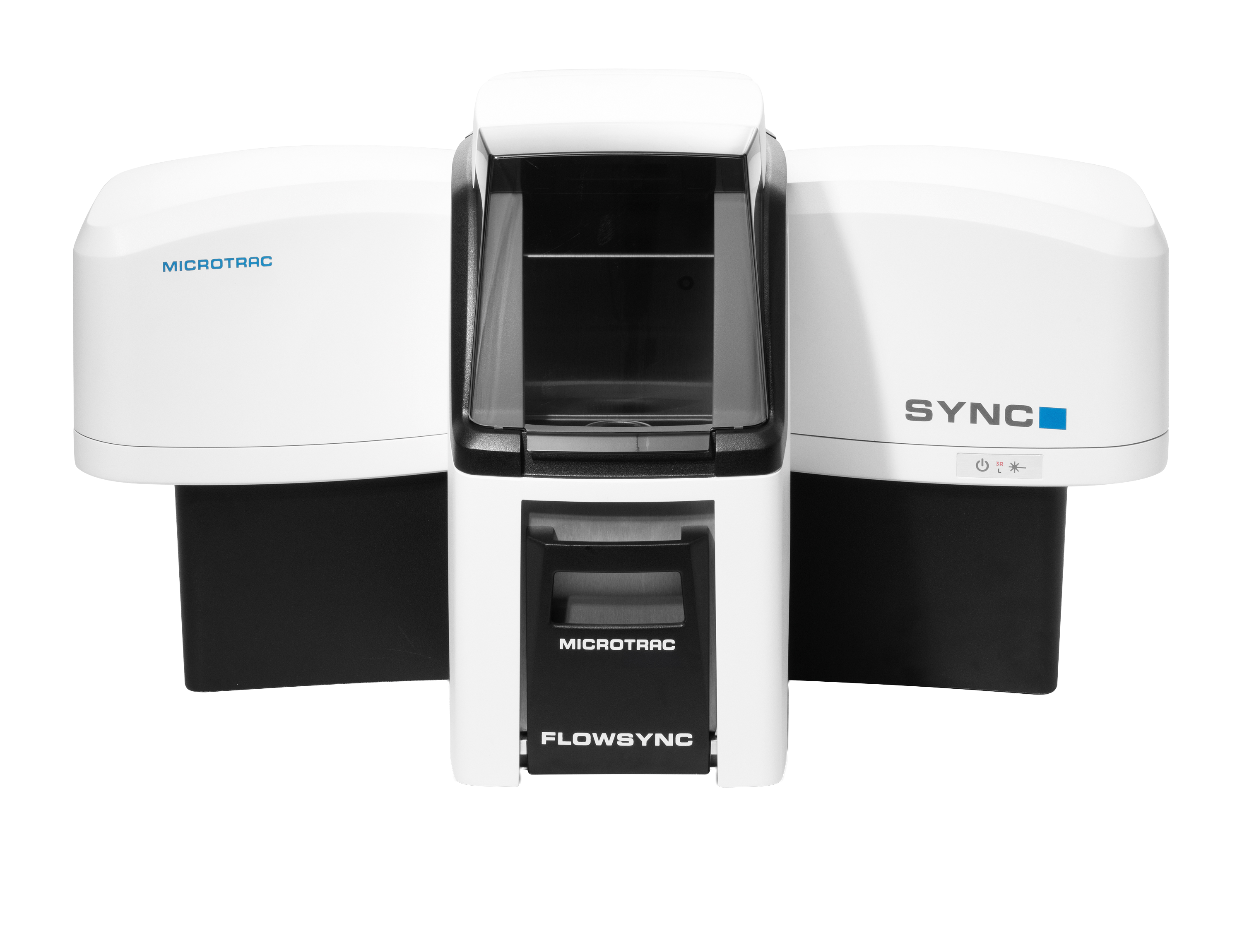
The SYNC combines laser diffraction with dynamic image analysis to measure particle size and shape simultaneously, providing comprehensive particle characterization.
This is valuable because it moves beyond simply asking “What is the particle size?” to also asking “What do those particles actually look like?”
2. Surface Area & Pore Size
Two materials can have similar particle sizes but very different internal structures.
A porous material can have significantly greater surface area than a non-porous material with similar particle size. This difference can affect how the material interacts with gases, vapors, and other substances.
Why Does This Matter?
Surface area indicates how much surface is available for interactions, while pore size distribution provides insight into the spaces within a material and how molecules can access them.
These properties can influence:
- Adsorption: A larger accessible surface can provide more sites for molecules to interact with a material.
- Transport: Pore size can influence how gases and vapors move through a material.
- Material performance: Differences in pore structure can affect how a material stores, separates, or interacts with other substances.
This is why particle size alone may not explain differences in material performance. Two particles can look similar in shape while having very different surfaces and internal structures.
BELSORP MAX X
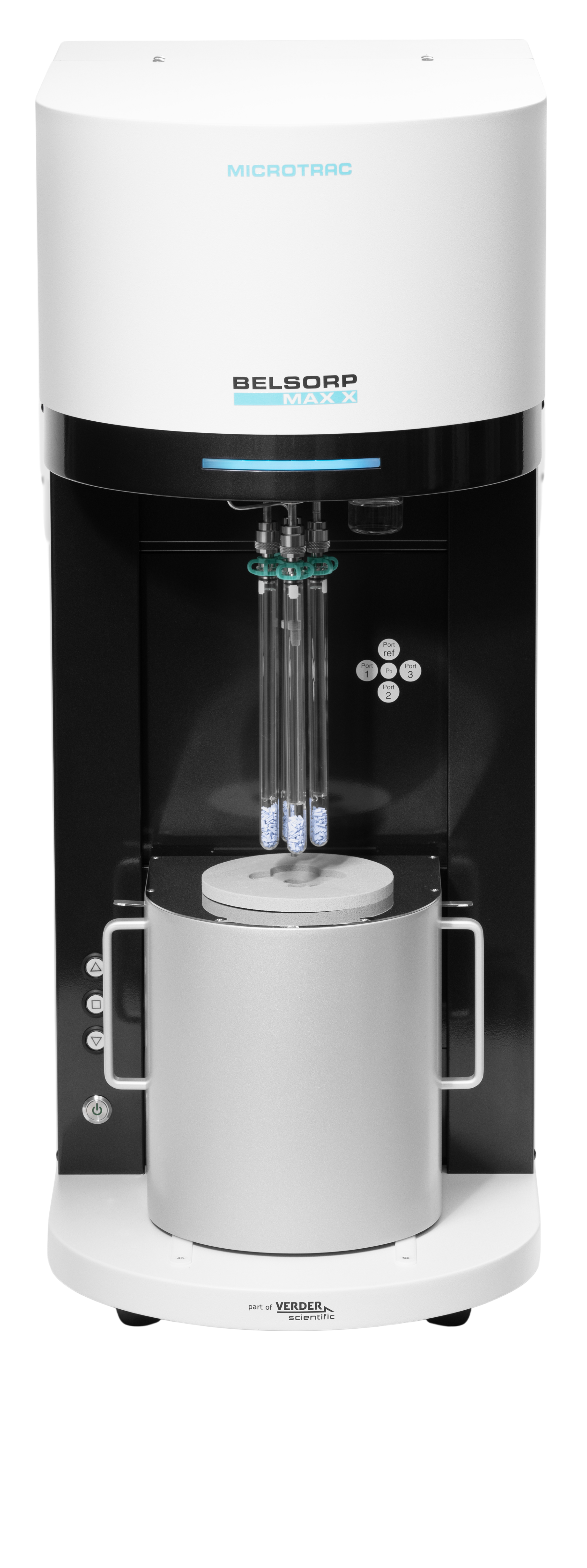
The BELSORP MAX X uses gas and vapor adsorption to characterize BET surface area and pore size distribution.
With vapor adsorption capability and a wide temperature range of up to 70 °C, the system can support characterization across different material and application requirements.
Its AFSM™ technology also helps minimize the influence of external environmental conditions during measurement.
3. Density
Density provides another perspective on a material's physical structure.
For powders and solids, skeleton density describes the density of the solid material itself, helping distinguish the solid framework from the spaces between particles.
Why Does This Matter?
Density can reveal differences that may not be obvious from composition or particle size alone.
For example, two powders may have similar particle sizes but different densities due to differences in their internal structure or the material making up the particles.
Density measurements can therefore support:
- Material comparison: Identify differences between materials with similar physical dimensions.
- Powder characterization: Understand the relationship between the solid material and its measured volume.
- Process understanding: Provide additional information when evaluating how a material packs or occupies space.
BELPYCNO
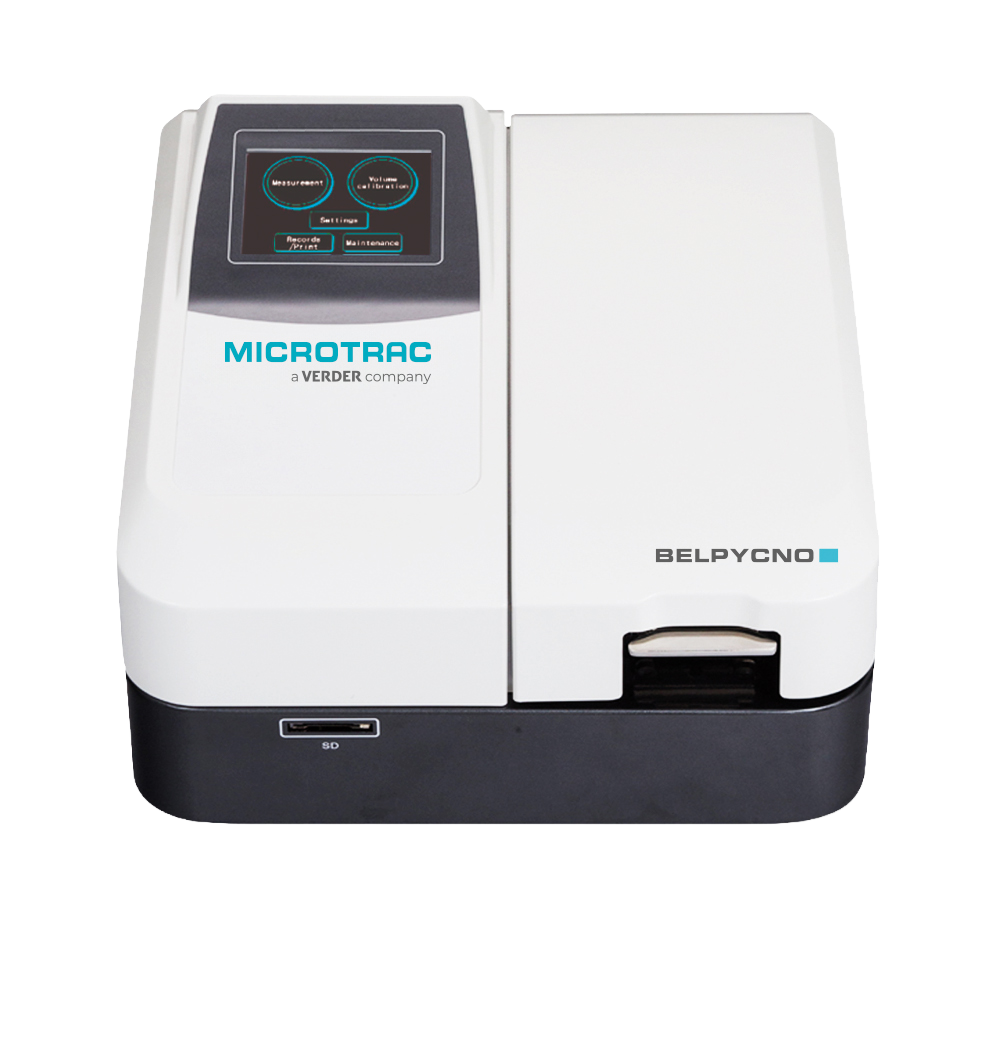
The BELPYCNO measures skeleton density for solids, powders, and slurries.
By adding density to particle size, shape, and surface measurements, it provides another layer of information for understanding the physical characteristics of a material.
Why Measure All Three?
The real value comes from looking at these physical properties together.
A material could have:
- The same chemical composition but different particle sizes
- Similar particle sizes but different surface areas
- Similar surface areas but different densities
Each measurement answers a different question:
- Size & Shape → What do the particles look like?
- Surface Area & Pore Size → What do their accessible surface and internal structure look like?
- Density → How much solid material occupies the measured volume?
No single measurement can capture all of these characteristics.
Together, they provide a more complete picture of how a material is structured and how it performs.