
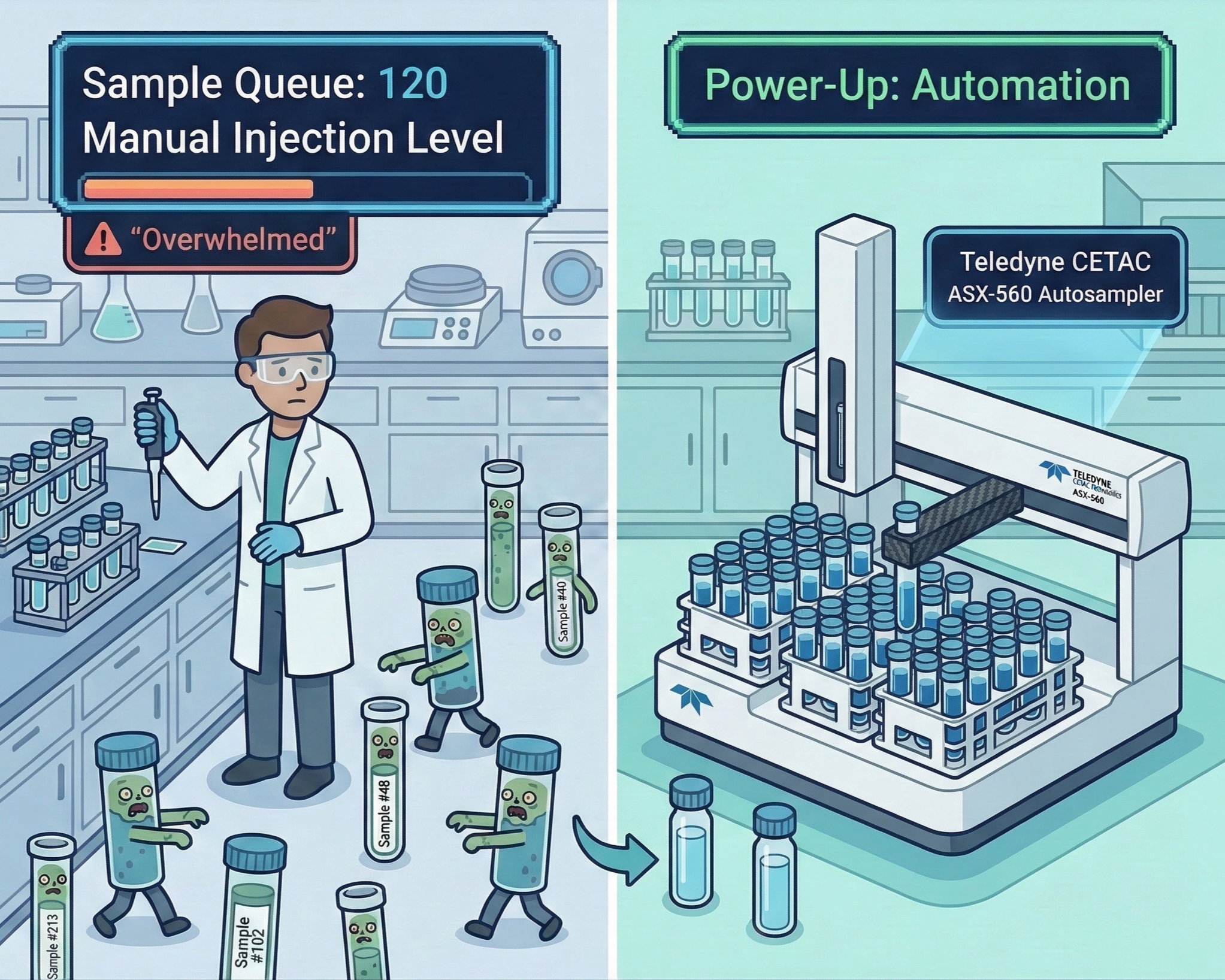
Running large batches of samples is a routine part of many analytical workflows, particularly in laboratories responsible for environmental monitoring, industrial testing, or research studies. In these settings, analysts may process hundreds of samples in a single analytical sequence, often repeating the same sampling and preparation steps throughout the day.
Even with highly automated instruments, one part of the workflow can still become repetitive: sample introduction.
When this process is handled manually across long analytical runs, it can become time-consuming and introduce small inconsistencies between samples.
Automating the Routine
Autosamplers automate the process of introducing samples into an analytical instrument. Instead of manually injecting each sample, laboratories load prepared samples into trays and allow the system to handle sequencing, probe movement, and rinse cycles.
Automation helps maintain consistent timing between samples while reducing repetitive manual work for analysts.
Systems like the Teledyne CETAC ASX-560 Autosampler are designed for high-throughput elemental analysis workflows, with precise XYZ probe movement, flexible rack configurations, and integrated rinse systems that support consistent sample handling across long analytical runs.
Example: Automated Mercury Analysis
In an elemental analysis workflow described in a recent application note, environmental samples were analyzed using a sampling system equipped with the Teledyne CETAC ASX-560 Autosampler. The autosampler handled sample sequencing and rinse cycles throughout the analytical run, ensuring that each sample was introduced under consistent conditions.
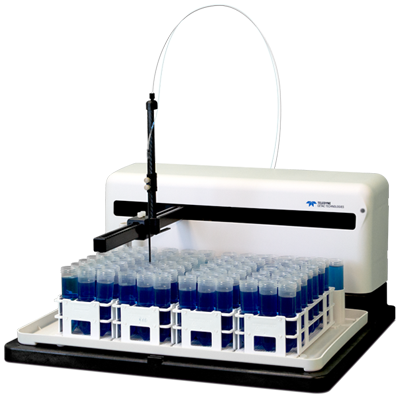
With each analysis taking approximately 95 seconds, the system was able to process approximately 38 samples per hour, demonstrating how automated sampling can support high-throughput analytical workflows.
The study also showed that optimizing the system configuration could reduce reagent consumption and waste generation while maintaining reliable analytical performance.
Improving Workflow Efficiency
Automating sample introduction may seem like a small change, but it can significantly improve laboratory workflows. Autosamplers help laboratories:
- maintain consistent sampling conditions
- process larger batches of samples
- reduce repetitive manual injections
- allow analysts to focus on data rather than routine tasks
This means less repetition and more time spent interpreting results.
Interested in learning more?
Read the full application note on automated mercury analysis workflows using CETAC autosamplers or contact ATS Scientific to learn more about automation solutions.